
I sat with the phone off the hook, watching the light blink, soundlessly yelling at me, while I was wishing I could know more than I knew. Suddenly, it occurred to me that the Rover should have the car phone somewhere inside it. I got up and went to the parking lot. The Rover sat there, looking as wonderfully all male as it could possibly be. I opened the driver’s door and immediately saw what I’d missed when we’d driven from the airport. A black case was centered between the center console and the driver seat back and wedged up under the armrest. It was innocuous with no markings and a flip open top. I flipped it up and the phone eased up of its own accord, along with a decent sized keyboard with numbers.
I pulled the curly-wired device up out of the case. A dial tone came out of the thing without me dialing anything. I dialed the office number, and another staff clerk picked up immediately.
“Just testing this new car phone, Charlene,” I said, and hung up.
It was truly amazing. How it all worked, I had no idea, but I was determined to find out. A phone would now always be there as long as I was close to one of my cars, and how they’d gotten it installed so fast I couldn’t imagine. I wondered if they’d gotten to the other cars. When we’d driven in, I’d seen four Taurus sedans in the lot, all white and I had to smile, the CIA duty car in the U.S. was a Taurus, and the ones I’d seen had all been white. So very secretive, although I’d never seen any of the SHO models and would have to check the cars out to see if they were that, not that it was vital. Ford Tauruses with Yamaha engines. Times were changing at near light speed.
Mary walked through the door, coming from the conference room meeting. She said nothing, not even looking at me, and got into the passenger seat.
I put the phone away and got in for the ride home.
“You’re not sleeping with her, but she’s going to make everyone think you are,” she said, looking out through the windshield.
I was struck dumb, a million questions rocketing through my mind, but following my sales training, I said nothing. She hadn’t asked a question, and her conclusion was better than I could have hoped for.
“What’s the new electronic device you were holding?” she asked, changing the subject better than I could have
“Car phone,” I explained. “New technology. They are installed in all of our cars now.”
“Does it work?” she asked.
I craned around and had to pop my seat belt off to open the case and pull the receiver out. I handed it to her and told her to lean down to push the buttons and use the dial, even though there was no dial.
Mary called her sister, and the call went right through, which surprised me as I was expecting some interface or interference at the very least.
I got out of the Rover and went back inside. I found Nguyen, Kingsley, Quincy, and John Nash waiting in the conference room vacated by the women. I informed them that we would be meeting early the next morning to figure out how to proceed. I told them nothing of my conversation with Tony or the potential for a loose ‘broken arrow’ of a nuclear device somewhere on that island, or with something to do with Murder Island.
I went back out where Mary was still talking away, and that remained true for the remainder of the trip home. When I pulled into the garage and began unloading the back of the Rover, I noted that Mary didn’t get out of the vehicle; instead just went on talking. I went into the house, leaving the keys in the ignition.
Twenty minutes late,r she came into the kitchen from the garage. She tossed the Rover key on the table and went into the living room. I followed.
“Meg wants to know how much a car phone is,” she said.
“You tell her you don’t know,” I replied. “I think they cost about seven thousand dollars, and then about two dollars a minute to talk on. If you tell her that, then my goose is cooked. The expense of having several of these new gadgets will blow her mind, even before she settles down and figures out that I’m not at all who I have been telling the family on both sides I am.
“What could be worse than your parents?” Mary asked. “He said that he’d seen the movie The French Connection. He thinks you are the man behind the French drug supplier that got away.”
I stopped what I was doing and sat down on the Taos bed couch. The T.V. was off, so I stared at the screen. Pushkin and Tigger, the two new cats from the pound, sat with me, probably wondering in their cat minds whether I knew the television wasn’t on or not, since it was almost always on.
We’d been at Chicken Joe’s in DePere, Wisconsin, when my dad had verbalized his conclusion, with my mom nodding her head like one of those old dolls seen bobbing their heads all the time in back windows of Chevys and Fords.
I hadn’t realized that my wife, standing far away, could hear the exchange. When dad made his short presentation, with Uncle Nubby present, the man who was head of the St. Norbert Music Department and had gotten me into the college with sub-par grades from high school, I hadn’t replied or responded in any way. I would not say that I was a drug dealer, but I would not deny it either. Nubby helped where he could.
“That’s not a nice thing to say, Bill, about your own son, and I don’t believe it’s at all true.”
Dad shook his head but said nothing, and everyone went back to drinking the Old Fashions served in ‘tubs’ that they favored. I’d walked off to the other table where my own nuclear family was seated.
I sat and wondered about what point in life I have to reach in life to be able to tell my parents that I was one of the good guys. Not a drug dealer. Never a drug dealer and enemy of all drug dealers. The Agency was like a clamoring old metal-plated ship sailing through rough waters about the issue, as Tony described it to me.
“We can’t get and keep good people who resemble good people unless they are good people,” he’d expounded. “The lone assassin crap in the movies, and double oh seven and that lone horse pucky stuff is hurting us. We need more family men and women who can do the job, but they can’t do the job if they’re all getting divorced because they have to keep secrets from their spouses, and those spouses get tired of being out of the loop.”
With my own family, I’d already decided to tell them everything I thought I could, short of nuclear stuff. The Agency had ears everywhere in my home and car, so they knew what I was saying and how my family was handling it. The Agency evidently understood because I had only been called in once for something secret, I’d mentioned over a non-secure line. The interview had been very short.
“Who is this woman you’re talking to?” I was asked, after listening to a short conversation I’d had earlier.
“That’s my mother,” I answered.
The small team packed up their stuff and were gone without saying another word. That clarified for me how the Agency would handle such things. When I mentioned the incident to Tony, all he said was “just keep on delivering the goods.”
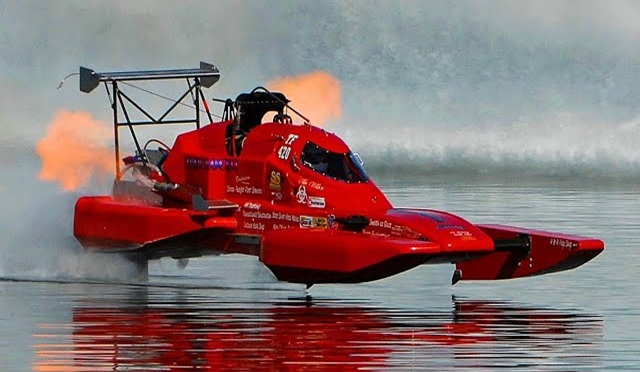
The boat was merely a big, heavy, overpowered beast, or so I thought until I took over the helm from Kingsley. Being the gentleman he was, he gave me no instructions of any kind on how to handle the craft. My father held a 10,000-ton license with the Coast Guard, and I’d piloted many small boats in the Coast Guard auxiliary when I was a kid, but nothing specifically like the thundering offshore racer the Fairey had been carefully turned into. The forty or fifty-mile run would be fairly well buffered by the main body of the island extending down, but when we reached the end of the main part of the wave-blocked area, as the winds were almost continuously coming in from the west across the land, it would be a different story.
There was no wheel as the boat was not mechanically controlled. Servo motors ran everything remotely, not cables. A center toggle stick stood up and out from the very center of the console. We were inside the Key West part of the inland waterway and approaching one of the canals that allowed for turning and then reaching the offshore ocean waters. I gently pushed the little stick to the left with my index finger, and the boat moved in the appropriate direction. I was impressed. Such a tiny move, but such a huge response. I knew I shouldn’t be surprised because the technology wasn’t new to me, but I’d never had such a hands-on physical reaction to its application before. Like a child, I wanted to move the stick all over to see what would happen, but I maintained my decorum as the boat steadily ran straight ahead up through the center of the canal toward the offshore breaking waters.
I’d never played with such a powerful agile but heavy boat before, and as soon as we hit the ocean’s chop, things changed. I’d read Donzi’s book on working the ocean at high speed in racing machines, but the Fairey I was in wasn’t exactly that. The principles seemed the same, though. The capsule egg-like machine that held the fifty-caliber machine gun was heavy, but that weight gave the boat extra heft in lighter chop. I looked at the tachometers, both showing turns of about 5000 RPM. I moved both throttles forward, and the boat acted like it was being set free. In seconds, we were no longer quartering the sides of the swells but angling back and forth across them, up on top of them. The speed went to sixty, which is when I turned slightly to gauge the waves off my starboard side of the hull and saw the other boat.
I could tell in an instant it was an open racing boat of the twin ‘pickle-hull’ kind of thing. Probably gas turbine powered, so there would be no outrunning it if that was necessary. Both Nguyen and Kingsley were below deck, and I had to have them up right away, and there was no intercom to reach them. With the hull slamming its way through and over the waves, it was impossible to yell down to them. I did the only thing I could think of and brought both power levers back to their idle setting in an instant. The boat lunged forward, its bow down to the point where I fell over the control panel into the windshield before I could recover myself. Pulling myself out, I turned to dive down through the cabin door, but caught the tunnel-hulled craft shoot by.
I was astonished to see the pilot of the aircraft looking across the waves from the other boat’s passenger or navigator’s bolster. He was all strapped in as all members or crew were in racing boats.
“We’ve got company,” I yelled down into the opening before returning to the control panel mounted on the transom. Kingsley reached me first and immediately gave his attention to the other boat that had preceded us, but was making a great half circle to come back to where we sat dead in the water.
Nguyen didn’t bother to look, instead moving forward past the upraised center of the boat to run toward the bow.
“Hit the automatic,” I said to Kingsley, knowing he’d know exactly what I was talking about. The fifty was in a large egg-shaped pod that was held in place by four large deck clamps. It couldn’t be moved or actuated until those clamps were released, or the movement of the weapon and its structure might affect the movement of the boat itself.
I glanced back as I pushed the throttles forward and then stepped aside for Kingsley to take over the controls. I moved to the passenger side of the craft and popped up the video screen. The fifty wasn’t manually controlled, like the old days. It was all electronic, with little paddles, like the one that controlled the steerage of the boat, determining its aim and the video screen targeting whatever was in front of it with a transmitter alongside the barrel.
“Clear,” Nguyen yelled, more loudly than I’d ever heard him say anything.
I switched on the targeting system, and the view on the screen came alive. The 50 was up, and the screen was showing me the bow of the boat and the ocean beyond.
“We’re quartering the wind,” Kingsley said over to me. “That racer is light and overpowered for anything but racing in ideal conditions. Let’s give it less-than-ideal conditions and run into the wind. He turned the boat toward the open ocean, heading west as we’d cleared Key West a few miles earlier. The wind had to be hitting about thirty, and would that be enough for what Kingsley likely had in mind. I half stood to get a look at the fifty caliber and noted that it wasn’t mounted high enough on the deck to be too noticeable. Of course, all that would change when the first tracers left the barrel, if that was to be the case. Against the advice of the armorers who’d installed the weapon, I was running it with all tracers, like I’d had my unit do in the Nam. I would never forget the effect on the enemy when my company opened with all tracers. It was frightful, and the enemy kept its head down long enough for some more intelligent response to be thought up.
The racer pulled in about a hundred meters behind us.
“Is he toying with us or is this serious?” Kingsley yelled.
“The pilot from the plane is the passenger,” I replied. That can’t be a coincidence.”
Kingsley pushed the throttles forward.
“Let’s go to about seven thousand, which with the wind coming straight off the bow should give us an air-wafting resistance of about thirty knots or more.”
“We can’t outrun him; he’s got a gas turbine in that thing.”
“I’m not intending to outrun him, I’m intending that he fly on by,” Kingsley replied, although I really didn’t understand.
I looked at the speedometer, which was showing eighty-five knots or about ninety miles per hour, and there was still a thousand RPM left on the tachometer dials. The boat was faster than had been advertised, by some margin. 85 knots was just under a hundred miles per hour. Wind across the boy had to be one-thirty.
I looked back to see the other boat match our speed and then pull over to the port to come up on us. I turned to the 50’s video screen and then toggled the gun’s barrel to point as far around to the port side as possible. The weapon was not able to point directly behind us; however, in fact not even close. I noted that at this speed, the boat was like a rock riding up on top of the waves; of course, it weighed probably five or six times what the all-titanium racer did with half the power. The boat was more solid at a hundred into the wind than when it’d been moving slower.
“What’s the plan?” I shouted over to Kingsley, wondering if he was going to turn the craft and if we wanted to go to the point of actually firing on the other boat that had done nothing but follow and then sort of mildly challenge us by just being right out in the middle of nowhere in the middle of the ocean and approaching in such a provocative manner.
I looked back again as the racer dived up in the air, the entire hull flying up at forty-five degrees before pancaking down and disappearing behind us.
“Wow,” I yelled over to Kingsley, and saw him smile. I wanted to tell him he was spot on with his plan, but it would have to wait.
But the racer wasn’t done. It recovered and headed off at a forty-five-degree angle, no longer trying to fly directly into the wind.
“What’s he doing now?’ I yelled, my eyes glued to the fast-moving silver object.
“He’s going to angle ahead of us and then come straight toward either our port hull or directly at your hull. You may have to bring the machine gun to bear and convince him of his mistake.”
I almost laughed into the wind. Convincing him of his mistake seemed a pretty light way to put having fifty caliber tracers moving all around one’s position.
Suddenly, the racer powered down. I wondered if the flight through the air into the wind had damaged what appeared to be a very powerful but flimsy craft.
“Take a look to the northeast,” Kingsley said, bringing the throttles back to make about forty knots. “I’d say that’s a destroyer coming at us at flank speed by the bow wave. Hard to not recognize that out here. Must be doing about forty knots, and the windsare no problem for her.”
“Think they’re helping us?” I asked, wondering why I asked. What else would a U.S. destroyer be doing, running at flank speed in our direction?
The racer with the pilot aboard was fast departing, evidently heading at a very high rate of speed back toward Key West. Quartering the wind and running with the swells, it could probably do a hundred and fifty or more. I thought about fuel. I knew that run had cost us a load of fuel. Anything above sixty miles per hour, I remembered, cost us about two gallons a minute, and there were going to be no Avgas dealers anywhere around. We had about a thousand gallons, or had had about a thousand, including the reserve cans Nguyen had found or stolen back at Key West.
Kingsley brought the boat around to again take up a course heading dead south. I watched the destroyer slow and turn, as well, wondering where they would take up station. I stared all around and up into the sky, thinking about what other forces might be out and around, looking to hurt us or to protect us.










The pilot off that plane was also aboard the racing boat !! What’s his status and plans for your upcoming “activities”??
Doesn’t look good !
but I’m certain you and your crew can deal with it 😉
Semper Fi
Thanks for the confidence SgtBob, and with the whole U.S. Navy backing us, it was a good bit easier
and confidence inspiring.
Semper fi,
Jim
I found myself about three chapters behind. Loved the part of a jealous wife. I mean how do you explain that to your wife. I have been fortunate that she just accepted, or seemed to, my word. It will be fifty seven years for us in about a month. I really enjoyed the extended session of reading. .
Thanks Harley. I tried to buy a Cowardly Volume IV on Ebay to quickly get one for someone who sent a check
because it takes weeks to order and get one from the printer. My Volume IV is selling for $74 minimum on Ebay! Jesus Christ, I can’t afford my own books! And I make nothing on those sales either. Thanks for enjoying the real family problems of being such a character as I was and remain. Much appreciate the compliment
Semper fi,
Jim
LT, a strange story at this point. Hoping it makes sense in the coming chapters.
Many of my stories within the books are ‘strange’ as real life is stranger than the objective or subjective
flow of fiction that can be most accommodating to the reader but not built up of miniscule facts that help
my readers be totally attached to the what’s really happening in real life.
Semper fi,
Jim
With the Navy for security what could go wrong?
The Navy can be an awesome force when not restricted by very rigid and onerous orders from long distances from
any action or hint of action. Loved having then around for backup though, like the ever present air force.
Semper fi,
Jim
Your life never let up, from the time you stepped off the transport in Nam until now, time of story! I came home, went back to working the job I had, laying brick, block and stone! Not complaining or, by no means, bragging! Had a great life, but missed the intensity of adrenaline at times! My glorious wife will affirm that! Enjoy your story, look forward to seeing each episode! Gonna purchase a few more before it’s over! Semper Fi LT!!
We all make contributions to this country in different ways Junior. Most of what I experienced was placed at my feet and
I was not given a whole lot of choice, if I wanted to have any kind of decent life for my family. My dad was Coast Guard enlisted and i was
the first in my family, going back a ways, to graduate from college and remain the only one with a doctorate. Thanks for adding part of your own story to this odyssey.
My friend,
Semper fi,
Jim
I am SO jealous! None of my boats had Lamborghini engines or pop-up 50 cal machine guns!
Makes me recall the outboard we had on our aluminum dinghy – a 5-HP British Seagull. Two-stroke, burned a lot of oil – pushed our 32′ schooner-rigged live aboard at a mighty 3 kt – but on the dinghy would push the biggest shrimp boats around. 5-blade, 18″ prop.
Truly enjoying the story line, especially in one of my favorite habitats. You are doing a fantastic job – but write faster!!!
Craig, the stuff was courtesy of the CIA. Who can afford such toys, although to the Agency those are not toys.
My salivating to possess some of them as my own was sometimes successful until I realized the expense money I did
not have. The tuning of the boat came in at nine thousand dollars when that amount would by as house back then.
The ammor for a fifty was two dollars a round, one-fifty for a clip and five bucks for a tracer round. A band of 100 rounds was almost five hundred
dollars. That’s more like 3000 in todays money. I took a friend out from the Nam and he grabbed the M-60 and fired off the whole hundred rounds in
one continuous stream and could not understand why I was so angry and bereft as I scrambled to collect all the brass and the used clips.
Semper fi, and great comment,
My great friend,
Jim
I still find it fascinating that as we live our lives “what we tell our wives” is our major question! Also the control system inside the bubble around Murder Island is interesting: Is the USN and other US assets just controlling the access and hoping you will be successful inside?
Why me? Why us? Why the ‘bubble’ as you put it? Interesting mission and mystery,
some of which you know, being as close to me as you are.
Thanks for bringing stuff up that even I don’t always think of.
Your great friend,
Jim