
The planning for the mission had come to an end without what I considered to be the key element of it, which was, what in hell was the real mission because it sure wasn’t breaking up a band of drug smugglers, stealing their cash and destroying them and their stash. That explained why the DEA seemed to have little or no interest in what the CIA was doing inside the U.S. borders and seemingly treading on their turf and mission.
The photos had proven to be all but useless. I’d taken them using the lowest speed film made by Kodak but the vibration of the plane in the air had blurred everything. If I’d used a faster speed film, like a 400 designation, then I knew I’d have gotten clear shots. but not of enough quality to do much good. The KH-ll photos came in on the day before we decided to kick off the mission and get the boat positioned to one of the islands near our target. Going straight in after approaching from Key West didn’t seem like a good idea. So, we’d land, camp, and then go in just before first light, considering whatever activity the NRO or the Air Force, with its available SR-71, might alert us to. Why we were going in at all and not Delta Force or a SEAL team wasn’t explained, any more than why we needed probable cause and the island’s owner’s approval when the CIA was strictly prohibited from operating within the borders of the USA except in cases of working counterintelligence…unless there was counterintelligence involved. We were not given that data either.
The NRO photos were a wonder and looking at the big blowups made me wonder how I had come to think that I might be able to do better with a small rig of my own in a vibrating mess of an airplane. There was just no change. The small air strip, obviously intended to land and take off only the tiniest of airplanes, showed the individual gravel pressed down to secure its surface in the packed sand it sat on top of. The two Quonset huts showed the individual runnels tracing back and forth across them to give them strength. The island was supposed to be dry of water but there was a hand pump next to one Quonset which made me think there had to be potable pure water somewhere down below the island’s foundations, whatever those were.
Hospital Island appeared on the NRO satellite map, although there was no hospital located there in modern times, and, in fact, the old hospital that was there and the small sandspit island’s namesake, was supposedly way down underwater in rocky ruins because the ocean had risen to much since hundreds of years ago because of global warming, which made no sense at all. Again, supposedly, SCUBA divers had gone down and found the ruins of the Civil War hospital and cemetery, and renamed as the Dry Tortugas Island, with Old Post Civil War Fort Jefferson taking up most of the space on the small island. The seventy-mile trip was finally over, the destroyer disappearing back over the horizon, and the National Park attendant to deal with as we cruised slowly up to the long row of boat slips, almost all empty.
Kingsley pulled the boat into a slot. The NRO report had indicated that the place was not equipped with water, food, or shelter, but then we were not staying long. The intent of the travel was still preparatory, although an overnight visit was required in order to take a swing around Murder Island in the boat, hoping for a better outcome than when we’d rented the plane. That the pilot had been aboard the racing turbine was still more than a bother. Who could that have been and why was he along with whomever it was?
We had no tent that I knew of but instructed Kingsley to search the only other small internal area of the boat, located just before the engines. It was small, as I noted when I’d purchased the craft, but it would allow one person to stay in its single hull-mounted bunk. Maybe there were cupboards there that might supply the water and food we might need for an overnight visit. That this hadn’t occurred to me before was bothersome. We’d replaced the fifty back in its egg-like cradle, glad that we had not been required to use it. That the racer might not have counted on that kind of armament being a part of a rather normal yacht, running even at impossible speed for a normal yacht, was good news. It seemed to indicate that we were as yet undetected in our mission…a mission even its personnel were unknowing the true nature of. What they’d had to think of the destroyer bearing down on them before they raced away was another point to be considered, however.
Kingsley came back to the bridge as I prepared to disembark and deal with the National Park ranger on duty inside a small kiosk outside the wall of the fort and close to the slips.
“What’s the fuel situation since there’ll be no filling up here?” I asked before he could say anything about his search.
Kingsley just looked at me for a few seconds before responding. “That’s not going to be the main problem, and I think there’s sufficient anyway.”
“Okay, what’s the main problem? No food or water?” I asked.
“No, someone’s taken care of that,” he answered, “and try not to lose your temper.”
“Food and water and I’m fine, really,” I stupidly replied.
“No, there’s this,” he said and turned to let two people walk up the stairs from the bow cabin. It was Rosley Ryan and Nash.
I was in shock.
“What the hell?” I breathed out. “Stowaways?”
“We thought you might need provisions for this part of the mission, so we stocked up and then just stayed aboard for the ride,” Rosley Ryan said, her voice weak and contrite, a tone I’d never heard from her before.
“My fault,” Kingsley interjected. “Nguyen and I didn’t check the boat out when we got it ready for the trip.”
I wanted to explode. I was having no leadership talent in leading the mission, instead, from the top to the very bottom I was being led and I didn’t know to where or why or any of it. I only got hints and I wasn’t doing very well with the few I got.
“You brought food and drinks which we neglected, which is good news, and you stayed holed up in that small space the whole time,” I stated, matter-of-factly, like I didn’t have shred of anger at their independent actions at all. “Nice work, as there’s nothing on this island and we’re not equipped for night travel in this thing.”
Night vision gear, now that I was thinking more about preparations than the mission action itself, I realized that there were some things that would be wise to have and not much time to gather them in. Night vision binoculars would be among the other things we’d need to be held in reserve, as well as a real emergency medical kit, more food and water, and some extra cans of Avgas in case things got a little out of hand.
“You’re not mad?” Nash asked, sounding surprised.
“No, that’s for the after-action report,” I lied, although the after-action report would certainly have to be filed for the mission when it was over.
“Can we come on the mission?” Rosley Ryan asked, which didn’t surprise me. Those who sought to go into danger that they’d never experienced before often chose to go directly at it until everyone around them began to die. Once more, the A Shau experience came back to visit in my mind. Educating FNGs was nearly impossible without frightening examples right at hand to demonstrate with.
Kingsley and Nguyen were vetted beyond question for any mission, but Rosley Ryan and Nash were relative unknowns, and the trust element of the mission, should there actually be tons of money and more tons of processed drugs, was a big deal. One pocket full of cocaine and everything would go from potential success to absolute disaster in the eyes of the government and even local authorities.
“You can come,” I said, almost out of nowhere. “Are you allergic to iodine?”
“Why iodine?” Nash asked, a suspicious look on his face.
“To inoculate against nuclear radiation or fallout,” I said, thinking about another one of the supplies we might need.
“Wait a minute,” Nash said, holding out his right hand and backing up a bit.
“You said you wanted adventure and were all in, John, or are you ready now to take it back and return for being a guy who delivers coffee to real pilots and real engineers like at McDonald Douglas?”
“All in for what?” Rosley Ryan asked.
“You can come or not, the decision’s yours, but there’s no question-and-answer session that’s going to help you decide right here and right now. Think about it. Most of what we do is boring, but this isn’t one of those missions if the indications so far are accurate.”
We ate old McDonald’s burgers, which tasted just like all old McDonald’s burgers have always tasted. Eaten for the calories, not the taste, and there are plenty of calories. The water was bottled Dasani, which was probably taken straight from a tap somewhere, like most bottled water, although the convenience of the packaging was everything. Nash said that he’d paid for everything out of his own pocket, which was met my silence in our group. The cost of water and McDonald’s is likely to have been next to nothing.
The parking lot attendant came by and was kind enough to actually knock on the cabin door. Her name tag said Edna and her expression didn’t call for much of anything but obedience. I prepared to pay whatever the overnight charge was for the boat and us. I fumbled with my wallet to produce identification, and the woman saw my military I.D. card and changed.
“Oh, you’re military, so you can stay for free and your boat too, and I suppose these are your family, she said, waving her hand at the collection I’d brought with me. I said nothing, instead putting my I.D. and wallet away.
“I would ask, ‘Who the hell are you people, anyway?’ but I guess it doesn’t make much of a difference. Nothing ever happens here of note, and I am only here because I made some mistakes.” Edna grimaced as she remembered her reason for being sent to ‘detention’ at Fort Jefferson.
“Telling your boss that he was an asshole?” I offered, immediately regretting saying anything at all as the sale was made, Bartok would comment if he were around; “so don’t talk yourself out of that sale, which is all you can do once the client decides to buy.”
Edna was fine and, as it was getting dark, we all decided to retire for the night, boys in the main cabin and Rosley having her own private mini cabin all to herself. The night passed, and I automatically rose at six in the morning. It was dark as the southern tip of Florida was like Hawaii, so close to the equator that the sun generally came up around seven and went down at the same hour in the evenings. I roused everyone, which was remarkably easy, as they were apparently ready for the test drive around Murder Island to see what could be seen.
There are plenty of tourists with boats out here, so it shouldn’t be like when we flew low over the place and alerted whoever was down near the airstrip that we were intruding. I didn’t mention the man standing with what looked like a 12-gauge shotgun.
There were only three other boats that had stayed the night, but nobody was around as we eased from our slip.
Watch the fuel very closely,” I said to Kingsley at the controls. “That run at a hundred ate into our fuel supply, and we don’t want to have any more of that.”
He looked over at me strangely, probably to let me know that,qq of course, he was watching the fuel closely and likely that he understood that what happened with the turbine racer was one of those things that came with missions, potentially terminal or dangerous, but with no explanations if it waved off, like had happened in our favor. The mystery of the pilot’s presence reminded me that I would need a phone eventually to have Tony find out the pilot’s real name and then run a background check on him. He had to be somehow involved. How the connection might be made was impossible for me without more data.
Nash worked the lines, while Nguyen kept vigilant watch over everything, even though there was no human activity at all on land or sea that could be seen or sensed in any way. Rosley did what Rosley did best: she entertained the rest of us with her wild, expressive charm and stories about her husband, a newspaper reporter with a sexual problem where he could not often perform, which made the rest of us sympathetic. What would Rosley be like in bed? There were no thoughts that didn’t end up in pain from my point of view, and, although never openly discussed, I thought the others felt just like I did. The poor guy, and now his wife was a spy on a mission, no less.
Both engines turned over and started without any hesitation or delay, which kind of surprised me, what with all the pulleys and gears that it took to connect the carburation system alone. Backing away from the island gave a view of the fort like none other. To have been built when it was constructed would have had to take a supply chain of immense proportions, as none of the materials it was made of were native to the island, a plot of territory composed of only coral, sand, and a few palm trees.
The run to Murder Island was seven miles. The time passed quickl,y although not as comfortably as when the boat was moving over the tops of the swells at a higher speed. At low speed, everyone had to hold on to something at all times. The bolsters the racing boats used, allowing pilots and passengers to remain supported almost completely while standing, would, however, come with a cost and that was suitability when it came to others viewing the craft.
The island appeared on the horizon but only after our boat was within about a mile from it.
“What’s that?” Nash reported, pointing upward and outward off the port bow with his right index finger extended.
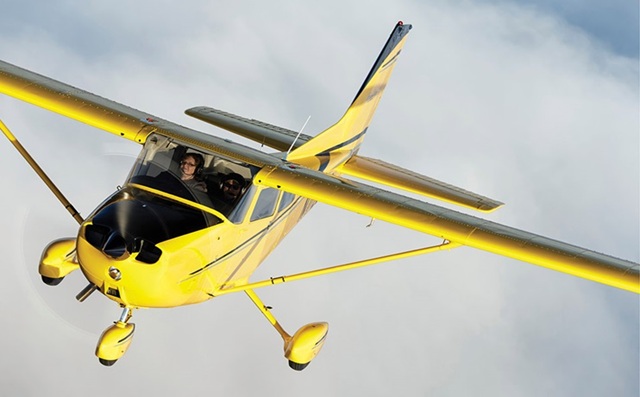
“It’s a one-seventy-two,” I said, shielding my eyes with one hand. A set of regular binoculars would have confirmed the Cessna make and model. Once again, I had not properly outfitted the mission for seaborne operations. The Agency was expecting much more than they were getting, I felt, but not for the first time or probably the last time.
“Is it the same one?” Kingsley asked, “The one we rode in?”
There was no point in answering. The plane was evidently yellow, which made it likely it was the same plane, and that meant the same pilot, in all likelihood.
The plane banked to head around to point in our direction.
“Battle Stations,” I said quietly, Kingsley having throttled down both engines to await developments.
“Nguyen, prepare the fifty, although I don’t know what damage a single small, fixed-wing aircraft can do to us. For all they know, we’re just tourists on an outing.” I said the words, but without much horsepower behind them.
It was too coincidental, the kind of plane, and it showed up upon our arrival, which meant that it had to have taken off from Key West with some warning. Our boat had been under surveillance at the Dry Tortugas Island. That result was rather inescapable. We were in a high-stakes game, and both sides were evidently pulling out all the stops.
“Bring us up to sixty knots,” I ordered Kingsley, as I pulled and gimbled the sighting system screen for the fifty out from the control panel and turned the system on. The fifty, once again, automatically rotated and raised its out of its cocoon. The screen lit up and showed a view off the bow that was slightly raised above the level of the ocean we were now proceeding through at a greater speed, headed away from the island. From before, I knew that there were three other screens available, but nothing that allowed for aerial shooting almost straight up like a true anti-aircraft weapon.
“What’s their point?” Kingsley said, after I ordered both Nash and Rosley to get below. John had his .45 out, but what good would that do against a high, fast-moving aircraft was anybody’s guess, except most probably nothing.
The plane lost altitude but not its speed. I knew that at sea level, the small week aircraft could barely fly faster than the top speed of our boat, but barely might be enough if they’d attached weaponry.
The plane passed over us at a forty-five-degree angle from our course. A mall object fell from the pilot’s side of the craft’s fuselage. I watched it hit the water about forty yards off our starboard bow. Seconds later, the plane was departing when the explosion happened. I ducked, as did Kingsley, although the blast was small, not even kicking up enough spray to get us wet.
“What the hell was that?” Kingsley asked.
“Grenade, more than likely,” I answered, thinking as quickly as I could about the risk and potential of being struck by one or more ot the tiny bombs as time went by.
“Get the engines up to red line and ride the following sea for everything we can get,” I said to Kingsley, working the screen of the fifty to accommodate shooting from either over the bow or at an angle toward the stern, even though the cabin stuck up off the deck too much to allow for shooting either toward the stern or much more than thirty degrees off the bow on either side.
“Give me the radio handset,” I said to Kingsley, who looked at me in question.
“What’s the Coast Guard channel?” I asked, grabbing the handset and then scrolling through the numbers appearing on the screen. I stopped at 156.8 megahertz, or channel 16, it was called.
“Mayday, mayday, mayday,” I reported, holding the transmit button down.
“What’s the nature of your emergency?” came almost instantly back.
“There are U.S. Navy vessels in the area,” I transmitted, and waited.
“We can’t give out that kind of data here. What’s your emergency?”
“Please call the Navy now and tell them that we are in a small boat seven miles off the Dry Tortugas and need immediate air power assistance.”
The Cessna came in for another run, although the boat’s speed was now somewhere over a hundred, making it difficult to catch us, although the Cessna was slowly gaining, like I’d predicted it would.
“We can’t take much evasive movement at this speed,” Kingsley reported.
“As easy as you can,” I said, finding the engine’s twin roars almost overpowering at such high rpms. “The pilot up there’s having a helluva time as he has to deal with the wind and our speed and then drop a hand grenade without sights or any machine assistance I’ve ever heard of.
The radio squawked, and I pulled it to my ear.
“Captain Joseph Valero, of the United States Naval Force Zulu. Can you provide verification and identification?”
“0104358, and if we don’t have air soon, it’s not going to matter,” I yelled back.
“Copy Wildcat, dispatching 53’s immediate with GAU rotaries at your desertion. Seven minutes to your arrival at your position. Go to 278.99 for adjustments to the situation.
“How can they get here that fast?” Kingsley asked, a second explosion going off not twenty yards from the port bow before the Cessna passed over again.
“Turn into him,” I said, give us as much time as you can. That 172 cannot make sharp turns at top speed without coming apart, not that he’ll be staying together very long once the fireworks arrive.”
Kingsley turned the boat to sort of follow the Cessna, making it difficult for the plane to turn back for another run until it was a good enough distance away.
“How can the Navy get here that fast?” Kingsley shouted the questions; the engine sounds overpowering, almost any attempt to communicate.
“They’re sending CH-53 Sea Stallions with a top speed of over two-thirty, and they must be about twenty-five miles away, just over the horizon. They have rotary fifty caliber’s mounted on each side, which will be no contest for the Cessna.”
“Are we going to kill them?” Kingsley asked, a look of fear in his eyes.
“It will likely be the Navy’s call,” I lied. “If it’s my decision, then they signed their own death warrant when they started dropping hand grenades.”





Bitch of a process to drop a grenade from a 152 and expect to hit anything! Seems to be designed to scare you off..
Homan
Dear Colonel:
Not only get it on target but do so in the timing required of the detonator. 4-5 seconds is not a lot of time to pull the pin, hold the safety safety lever and then get it neatly out the side window. But it was amazing that he got so close. I didn’t get to see if it was the same pilot though as it was a tense time.
thanks for the usual grsat comment my great friend,
Semper fi,
Jim
Jim,
Atta boy! Keep ’em coming.
Never a dull moment.
Surprised to learn that Rosley Ryan was married! In my mind I had always pictured a single gal.
I will mull over all of this chapter while I sleep tonight.
Best to you and yours.
THE WALTER DUKE. Yes, Rosley was married and amazingly enough, in spite of most female field agents only being out there to sleep for their country, most were married with very understanding husbands and counselor-type control agents handling them (never physically, howefever). Thanks for the short but great comment and I am sorry that it has taken me so long to get to the comment area.
Semper fi, my good friend,
Jim