
Given the data provided by Peter Kohler, there was no way I could call in a dust off on the island, as I’d planned, using the Huey Cobras. The ‘tube’ that led down into the underground or underground sand repository below the island had to be fragile at its topmost entry. The penetrating rounds carried by the Cobra attack helicopters might destroy the entry point, which I realized I was supposed to use as my own entry point to get down into the underground complex.
I pulled up the ICOM, as my thoughts went to what might be done to protect our landing party from being struck, attacked, or even killed.
“Tony, you there?” I spoke into the radio with the transmit button pushed down.
“What is it?” a voice I didn’t recognize said back.
I stared at the radio device and then considered before transmitting again. “We can’t use a dust off by the Hueys, so how do I assure that no violent players are awaiting our arrival or down inside that tube, for that matter?”
“Stand by,” the strange voice intoned, and I figured that I was being patched into communication, somehow, with Tony.
“Covering fire,” Tony said, his voice scratchy as whatever devices were being used to put us together weren’t as well melded together as I knew any of us listening and trying to work the nearly unworkable mission understood.
“What do we have for covering fire?” I asked, although I assumed he was talking about the Cobras once again.
“The Sea Stallion CH-53s,” he replied.
“How is that supposed to work?” I asked as my mind went back to what I knew about the giant helicopters and their capabilities.
“We don’t want anyone landing on that island except you,” Tony replied, ‘but the Sea Knights are semi-amphibious in that their hulls are waterproof. Not to the extent that the CH-46’s are, but with some lift, they can float and be fairly stable because their rotary fifty calibers give out a dispersed beaten zone out to a couple of hundred meters or more.”
I tried to take in what he was saying, but my mind kept going back to the Quonset huts. I’d wanted to strafe the island because of them and what they might be hiding. I wasn’t too worried about anyone out on the expanse of almost totally flat white sand.
Kingsley went through the cabin door which told me that we were about to enter the open ocean which meant that the timer was running and we had only a few hours before landing and I had no solution to the problem of what it might be like to approach the two huts only to shot dead by bad guys of whatever sort inside with simply but very effective AK submachine guns.
Nash came through the cabin door, his stint at the helm over.
I held the icom out with my right hand toward him.
“You were in communications when riding the back seat of those Phantoms in the Nam, which means that you went through communications school.
“So?” Nash asked, accepting the radio with both hands, like it was some sort of delicate device, which it was not. The special icoms we were using could survive and function after being dropped twenty-five feet onto a concrete surface, but I said nothing about that fact.
“I need to get in contact with Marcinko,” I instructed him. “He’s on one of the CH-53’s, probably not far from us right now, and heading up cover as we make our way to the island. I don’t know the frequency, although I should, but you can use the current setting and get what’s needed from the Agency. Here’s my code,”
I pulled my pen from my right front pocket, and then took out a small card from my wallet and wrote the code on its bare back. Agent codes were never to be shared, Tony had drilled into me, but he’d also taught me that whatever I felt was needed on a mission was allowed, and whether there would be a price for violating rules would depend on the success of the mission.
Nash sat toward the bow atop the cushions that weren’t cushions at all while he worked with the radio, finally getting up to come place the ICOM back in my hands.
“Transmit,” he said.
I pushed the button on the side of the radio, but didn’t get a chance to say anything as Marcinko’s voice came out of the speaker.
“Standing by for your orders, general,” he said, using his usual snotty tone.
I breathed in and out deeply before telling him the problem in detail, before asking him plaintively if he had some sort of solution.
“Yes,” Marcinko shot right back with no delay at all.
“Yes?” I asked, shocked, although I tempered my enthusiasm with the knowledge that Marcinko loved his idea of a practical joke, particularly one poorly placed. “Well, what is it?” I said.
“Thought you’d never ask,” he replied, using his smart ass tone.
“Well?” I asked again, hating the man all over again.
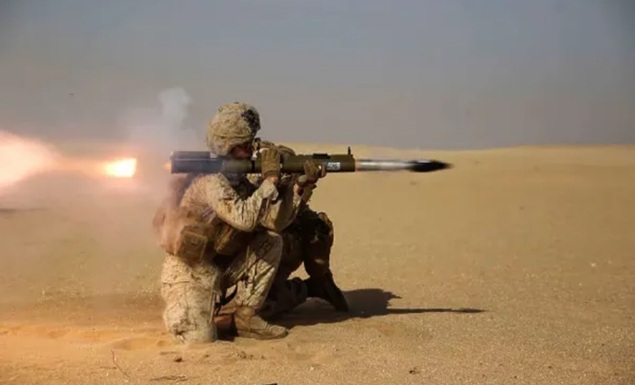
“M72, of which we have three in the Marine unit on the cruiser,” he answered, probably knowing that I didn’t know what an M72 was.
“You Marines called it a Light Anti-tank Weapon in the war, but the new terminology is M72, a little better and more accurate rig, but still light as hell.
I sent the other chopper back to the cruise at flank speed to retrieve them and the Marines who know how to use them. At our speed over the ocean, the other bird should have no trouble rejoining us well before we reach ground zero. We fly in low and slow, hover a few feet up, and then hit the Quonset with the small round and watch. That size round should do exactly what you want without causing much damage to what you need undamaged.
Marcinko hadn’t really been brought into the details of the mission, not out of deliberation but simply because he’d taken off right away to work with the choppers once I’d assigned him. Once again, he was proving invaluable. I would never have thought of using a light anti-tank weapon to get a small explosive inside the huts and then detonate, assuring that any human inside would be dead or too disabled to be close to being able to apply fatal force to others.
“Thanks,” I replied, grudgingly. “When the other 53 gets back, can you go in and fly recon around the place, so we’ll be sure about going in?” I knew the Cobras wouldn’t be able to stay on station for very long with their limited range, but the 53 could hover there all day long if necessary.
“Roger that,” Marcinko said.
Silence ensued, so I put the radio down on the faux cushion next to me.
Kohler moved to sit next to me.
“Got a smoke?’ he asked.
I shook my head, wondering why the man might smoke with all the other problems he appeared to have. I thought further in the silence before another conclusion came to me. He was terminal, so what difference did it make?
“We’ll go do this on that island while everyone, absolutely everyone, never sets foot there.”
“It appears so,” I said, wondering what the man was getting, as well as why he was along in his tattered condition.
“I understand,” he breathed out. “We’re expendable. Once we’re done, they’ll just kill us and move on. That’s why none of them will even set foot on the sand there.”
“Evidently, you were never in the intelligence community, even as an analyst?” I asked, already knowing the answer.
“Why would you say that?” Kohler asked.
“If you had been one of us, you’d know,” I said, my voice sounding tired, like I always was just before going into danger. “Agents don’t ever kill other agents,” I informed him. “There’s one damned definitive and great reason for that.”
Kohler said nothing, although I noticed he was fidgeting uncomfortably.
Nash had gone back out on the deck, so I excused myself.
“I’ll be right back, and then I’ll tell you why we’re all safe from our own people.” I turned and climbed the few steps through the cabin door. Nash was standing, braced, while talking to Kingsley
“Cigarette?” I asked of him, holding out my right hand.
“Didn’t know you smoked,” Nash replied, pulling out a hard pack of Camels and shaking one loose to fall into his hand, making it look like a magic trick.
He produced a Vietnam Zippo, the inscription on the side indicating that he was an ace. To be an ace in wartime was to have shot down five enemy aircraft in air combat, and, so far as I recalled, there were only three of those in the whole war period. Nash wasn’t one, unless his pilot was, and then the honor would flow over to him. I didn’t ask. I needed Nash and the others to be at the top of their games, not angry about being accused of being a fraud. Besides, I wasn’t proud of my own medals, so who was really the fraud?
I handed the cigarette and the lighter to Kohler and sat back down.
“The lighter’s Nash’s, so get it back to him,” I said, “the Zippo made by the Vietnamese for the military carries a lot of meaning and collector value now.
Kohler took a long hit from the Camel and visibly relaxed as the smoke did its work inside his lungs.
“I’ll make sure he gets it,” he finally said, inhaling again. “So, what’s the mystery of why agents never kill other agents?”
“You’ll laugh at the simple explanation for that one,” I said, smiling at the much more relaxed man in front of me, once again amazed that some small amount of nicotine could have such a significant effect.
“I’m ready,” he gently laughed out, reminding me about why I’d liked the man since I’d first met him, patrician, snobby, high class, and all.
“If an agent assassinates, murders, or kills another agent as ordered or for any other reason, then no other agent will ever work with him again. That agent’s career is over, and it matters not what upper management might say or do about it.”
“Wow,” Kohler breathed out with some smoke. “That’s simple, elegant, and has simply got to be true when you think about it. No other agent would ever trust that a kill order had been placed on him, and the man known as capable of killing another agent might kill them.”
I realized, after I left Kohler to sit with Nguyen, who no doubt was waiting to administer whatever weird Asian herb he was helping with to the man, that I hadn’t worked out any detail with Marcinko about who was going to go in and use the M72 system. Since nobody else, other than my team, was to access the island, we either had to have the units or the Marines assigned to them would be firing from the helicopter, which seemed a bit strange.
I stepped out of the cabin, first approaching Nash for the remainder of his cigarette pack, which I removed from his hand without comment. The resigned look in his eyes told me he understood what I was doing; Kingsley had the icom next to him at the console, so I grabbed that too. I wasn’t about to depend on guessing to cover our entry into the Quonset hut.
I went back below, handing the Camel pack to Kohler and then hit the button, hoping the frequency was still connected to the unit Marcinko carried in the chopper.
It was, and it then took only a very few seconds to assure myself that Marcinko was all over the protective strike against the hut, and anyone who might be holed up inside it, waiting for just such an attempt to access the device. My question about anyone who might be at the bottom of the tube was also answered.
“If the hole’s open,” Marcinko answered, “which is what we presume, and there’s no casement closure at the bottom, then the two point two pound charge, detonating in the closed space above, will kill anyone below from the pressure wave, as the explosive dramatically compresses all the air for a few brief but deadly few micro-seconds.”
“You mean it would do that even though the time when they could not breathe would be that short?” I asked, not quite understanding the effect.
“No, that’s not it,” Marcinko replied, his voice filled with seeming patient understanding. “Their lungs would be blown out.”
“Oh,” I answered, no longer surprised or questioning. It would be the same as being in the CEP of an artillery round going off. The pressure wave was so extreme that it could often be seen as a very rapidly expanding white cloud radiating out from the round’s center of impact.
Kohler lit up another Camel, smiling his thanks at me, then surprised me by taking a flat flask from his breast pocket, unscrewing the metal cap, and offering it to me.
“Sorry, Peter,” I said, shaking my head. “This mission is pretty shaky, and I can’t afford to be adjusted in any way, but by way of thanks for the smokes, you might want to tell me who owns or possesses that warhead down at the bottom of the tube or well, or whatever.”
“It’s from our own inventory,” Kohler, inhaling smoke and then taking a swig from the flask of some liquor, I was sure, although it lacked any aroma, to guess what it might be.
“Yes, enriched at Oak Ridge in Tennessee would definitely make it that, but that’s not really the question, is it, since we’re not in Tennessee.” For some reason, making that statement reminded me of the movie The Wizard of Oz, when it was mentioned that Dorothy wasn’t in Kansas anymore, and I smiled at the thought while I waited. Unless Kohler faded out again, I knew he would answer, as his very presence seemed to indicate that he was not at a point, late in his life, where he was willing to tell all if asked or allowed.
“Is it somehow connected to the drug operations that were running on and off this island?” I asked, growing impatient.
“Those were cover, as you would have discovered if you’d accepted the assignment I requested of you,” he replied, no accusation in his tone, however.
“I had a family, and still do,” I replied. “What was I supposed to do, move them with me to a throwaway island at the end of the country with only a plane to get back and forth, and I’m not even a pilot?” I finished, remembering the ridiculousness of the man’s earlier offer.
“You’d have become an important player in a huge worldwide game that isn’t a game, of course,” he said, blowing smoke across the cabin while continuing to down the remains of his flask.
“Would you help me a bit here?” I asked, as his answers were beginning to make no sense.
“You don’t understand?” Kohler said.
“My sympathies have not been those that favor the United States over other countries unless the need for that is beyond redemption. My family is German, and the family support is about being German, not American nor of any other country or race of national origin.”
“I’m still not getting it,” I said, my frustration growing with getting no explanation of anything I could understand.
“I support another culture entirely,” Kohler replied, his voice going so low that I glanced over at Nguyen to see if he might have to administer another hit of his secret potion to the man, “which is why I’m the family black sheep and, unless I was dying, which I am, would have caused the rest of the family to disown me.”
“Interesting,” I lied, “but that’s not helping me understand why I’m working ot recover or get rid of an atomic device not more than a few miles from where we’re headed right this minute.”
The boat seemed to heave longer and heavier, as if responding to my comment. I held onto the bench support but kept my attention on Kohler the whole time. He was trying to tell me something in the most roundabout fashion I’d ever encountered. I waited some more.
“What country or race or whatever do you support that would be so anathema to the whole Kohler family? I finally asked, my patience wearing thin.
The boat continued its heavier movement, which made me realize we were far out in the ocean, making the transition between underwater land masses below us. Soon we’d be back into shallower water, where the chop was sharper but the swells much less massive and smaller in height.
“I support Israel,” Kohler whispered almost so gently that I didn’t catch it for a few seconds, and then I reacted.
“Oh my God,” I breathed out.
I’d heard rumors about Israel getting the bomb, but it made no sense because that small country could not build the kind of facility to enrich the uranium and plutonium. The gross national product of that small country’s entire output would not pay for one-fifth the cost of building the Oak Ridge plant, the largest building on earth.
“The warhead belongs to the USA but not anymore,” I said, more to myself than to Kohler. It came rushing over me then.
“You’re helping Israel smuggle enriched material out of Oak Ridge, hence the cover necessary from the drug runners?”
“Not exactly,” Kohler replied.
“The enrichment is Oak Ridge, but there’s more. The device is weaponized already before being retrieved and getting off the island.
“Where’s that done?” I asked, wondering who had that capability outside of…and my mind stopped working.
There was only one place in all of North America where enriched materials were made into nuclear bombs or devices, and my presence on the mission, I knew, was directly linked to it. I wasn’t on the mission because of my experience retrieving nuclear ‘broken arrow’ weapons. I was on the mission because of that place and all that it entailed.









Don't Miss any Updates or New Chapters
Join our mailing list to receive the latest news and updates from our team. You can easily Opt-Out anytime
You have Successfully Subscribed!