
Günter spent the next ten minutes getting his routine down. He would be the point man with Immigration, and he had to be totally convincing, whoever the immigration official was. I prepared him in case more than one boarded; the man or woman was going to be an officer who had seen and heard many stories before.
After finishing with the irritatingly formal Günter, I sat and pondered our problem for a while. An epiphany came into my brain. I realized it did not really matter what the agent, or agents, believed. It was what they could do that mattered. And there was nothing they could really do, unless it was to embargo the entire ship and call in heavy-duty forces from the mainland. Dutch seemed hardly worth that kind of full-court-press effort.
There had been a fire on a cruise ship only days before. The passengers had taken pictures of the Coast Guard getting everyone off that ship. Immigration would have had its hands full. Only days before. Ships were never allowed to leave American waters and return without clearing customs and immigration, not if those people were headed for mainland U.S.A.
Dutch was in his cabin, dressed and ready. I motioned for him to follow me after I peered out of his porthole. I watched a Zodiac head in toward the end of the spit. Men were standing there, although I couldn’t see well enough to make out what they were wearing.
“Let’s get to it,” I told the young giant.
I stepped into the corridor and headed down the stairs towards the bilge deck.
To each Filipino I ran across, I asked, “Filipe?”
All responding pointed toward the bow, up near where the old workout area (now luggage storage) was located. The cabin doors along the corridor of the bilge deck had no numbers or identifiers of any sort. Everyone who occupied them knew who was behind every door. I stopped, with Dutch behind me, at the last door.
The bottom of the chain locker had to be near. I thought, fleetingly, that the chain ‘alarm’ must be as fully effective for Filipe as it was for me. I knocked. Somehow, the open entry tradition followed on the decks above did not seem appropriate where we were. The beautiful female Filipino woman, who had attended the Mousketeer meeting, greeted us. She gave me a huge smile, then stepped outside and moved past us. Dutch and I went in. The door closed behind us. I felt her through the door, out in the hallway, on guard. It was not a bad feeling. Filipe stood toward the back of his cabin and swept one hand down, inviting us to sit on one of the tightly made bunks. We complied. It never occurred to me until that moment that I had never heard Filipe speak before. We had communicated only with gestures.
“Welcome to my home, Indy,” he intoned. He spoke good English, uncommon for most Filipinos. Tagalog was one of those ‘sticky’ languages, like Chinese, where the accent, once ingrained, could seldom be totally supplanted. I didn’t tell Filipe that I didn’t like being called Indy. Coming from him, it seemed okay.
“Customs and Immigration,” I said, and then stuck one thumb out at Dutch, sitting to my left. “He’s not aboard. There’ll be one or two agents, maximum. We need to play a shell game with him.” I looked at the Filipino and raised my eyebrows.
“One or two agents can’t search an entire ship, not if the object of the search stays on the move.”
“Why?” Filipe said, in his quiet, elegant voice.
I exhaled, resigned to the fact that the entire reason for my having undertaken the cruise was my mission, and that the mission was, step by unalterable step, being degraded, if not completely undone, before it was actually underway. I reached into my left front pocket and pulled out a couple of ounces of the Aguiak gold. Unclenching my fist, I put it into Filipe’s hand. He examined the rough gold nuggets weighing down his palm. He raised and lowered his hand slightly, gauging the metal’s heft.
“More?” he asked.
“Bingo,” I said to myself.
“You’re in,” I said, “say nothing.”
He looked me square in the eyes for several seconds, and then blinked slowly in assent. No handshake was necessary. I was not certain that the man understood what I was really carrying, but all I needed at that point was his ready cooperation.
“Dutch, you stay with Filipe. Do what he tells you. That’s it. See you when they’re gone.”
I went to my cabin to mark time. When I arrived there, I removed the remainder of the gold from my pocket and deposited it into my little bureau drawer. I threw a couple of pairs of socks over the pile.
One of the little knocks on my door the night before had been explained. The other remained a mystery. Not much of one, however. Benito’s knock would not have been gentle. No, it was Marlys. I took the anklet from my right pocket and placed it into the same drawer as the gold. It was not easy to part with the silver trinket. I consoled myself that it would be right next to my bed. What type of help might a Sea Goddess need? Or was her request for assistance just a stalking horse? And what possible significance could a little silver anklet hold?
A Filipino knocked at my door. I knew it was a Filipino because none of the staff crew knocked anymore, unless the door was locked. I’d been expecting him, anyway.
I grabbed my digital Leica and headed out. He led me to the Lido deck. A table had been isolated from the rest.
Two men sat at the table, as Günter paced nearby. His relief in seeing me was visible, which worried me, for the agents would be master detectives at gauging emotions. Neither man stood up. They wore crisp white shirts with patches on both shoulders. The small gold badge of the Immigration Office was attached above their left breasts.
“This is agent Maxwell,” Günter disclosed.
I said “hello,” stopping before their table.
There was no chair nearby, as I knew was intended.
“You’d be the anthropology person?” Maxwell said, holding out his right hand.
I attempted to shake his hand, but he avoided the grasp, his expression turning from impartial coldness to one of slight exasperation.
“Your passport,” he said, dropping his hand back to the table.
“Didn’t bring it,” I replied, slowly lowering my own hand.
He and his partner looked at each other, then back at me.
“Third Mate Günter tells me that you left Dutch back there on one of the islands.”
I merely looked at him in response, so he went on. “That right?”
I nodded, turned on my small Leica, and then swiveled the small visible screen so he could see it.
“The Isle of the Tsar of Russia,” I intoned in my college lecture voice, “It’s a wonder of archaeology and ethnology. I’ll be registering the site when we get back to the mainland. It’s a true dig of enormous potential. There was a fire. I wanted to make sure that it was properly extinguished. We’ll pick up Dutch when we head back into Russian waters.”
I scrolled the digital photos by the agent, one after another. The photos captured the burning island. They were obviously of poor quality. The agent took my camera from my hand. I let the expensive device go, not really wanting to.
“How do we know he’s really back there?” Maxwell asked, still scrolling through the photos.
I watched his hawkish eyes, relieved that I had taken no other shots for him to view. I didn’t answer his question. He put the camera on the table in front of him, pushing the small top button to the off position. He did not attempt to hand it back.
He had one of those Thomas Magnum bits of hair under his nose. Unlike what the mustache did for Magnum, it made Agent Maxwell look strangely feeble. His eyes naturally squinted, suggesting he spent a lot of time looking into a mirror, practicing a display of hard, manly toughness. I didn’t like him, and I could tell that the feeling was mutual.
“Don’t you want to know why we want him?” he finally volunteered when he realized I was not going to talk.
I shook my head.
“I do have a question, though,” I said, meekly, looking down in submissive subjugation, waiting.
“Yeah?” he responded.
“Is Maxwell your first name, like in Maxwell Smart?” I deadpanned.
Günter stopped pacing. The agent next to Maxwell stiffened. I raised my eyes to Maxwell’s, no longer any supplication in them. And no life either.
“It’s also ‘doctor,’ to you…not the anthropology guy.”
I let my words hang and trail off, but their meaning and intent lingered in the air.
The tense moment was broken by the entry of another individual. A tall man walked over from the stairwell. He was dressed in what looked like an Admiral’s costume. It was all navy blue, with gold buttons. Epaulets of gold, as well, and a white barracks cover. The man looked impeccable. I stepped back, almost coming to the position of attention. The agents squirmed.
“Captain Kessler, sir” Maxwell said.
Both agents came to their feet at attention. Maxwell stuck his hand out. The captain puffed out, and then took it in a firm handshake.
“Agent Maxwell, it’s so good to have you aboard my ship. I see you have met some of my people.”
He waved at Günter and me, but his eyes never left Maxwell’s. Maxwell looked uneasy, letting go of the captain’s hand.
“I came aboard looking for Dutch, sir,” he began, but Kessler cut him off.
“Ah yes, our errant Assistant Cruise Director, no less. It seems that he has got himself into mischief again. We seem to have abandoned him on some deserted island. What kind of operation goes on here while I am gone?” The captain laughed at his forced little joke.
The agents joined with their own phony mirth. That they didn’t normally fly out to wayward islands on expensive helicopters to check out crewmen aboard expedition ships was not discussed, nor was who or what might have caused them to make such an effort.
“Well, we’d like this man’s statement, and also his papers, if you would be so kind,” Maxwell asked, his tone one of softness, unlike what it had been before.
“Gentlemen, gentlemen,” Kessler said, his smile taking us all in. “We did indeed come in from Russian waters. You have a perfect right to line up everyone on this ship, and check for proper paperwork, but please, no statements about anything. We are too well known to each other for such things. If I say that one of my men is not aboard, you know that to be true. If there is a statement you want, you may ask it of me personally, but not of any of my crewmen.”
Maxwell and his partner turned sheepish, and ceased making further demands.
“You’re dismissed,” Kessler told Günter and me, virtually out of the side of his mouth.
Then he appended to me, “You, come to my cabin once you have freshened up.”
I left, almost in shock. The man had displayed such a sense of control and eloquence that he stunned me. A shiver of anxiety ran up and down my back as I weighed the implications of the performance I had just witnessed.
I followed Günter to the staircase. I looked back at the agents. Maxwell’s eyes met mine. Neither of us blinked. I saw a firm guarantee of future conflict in his eyes.
“Great, one more little detail I’ll have to defuse for myself,” I said quietly, in English, to Günter’s back.
The words ‘freshen up’ echoed through my mind. I hadn’t liked Maxwell, but I at least understood him. I didn’t like Kessler either. But I knew I was a long way from understanding him. The top of each staircase I passed under now held a small image of Mickey Mouse. I hoped Kessler hadn’t taken note of them yet. I also reflected on the obvious fact that the agents had not bothered to follow up on Kessler’s statement, either.
In my cabin I shaved. Then I put on my best, newly pressed outfit. ‘Freshened up!’
I checked myself in the mirror. I was now ready for my confrontation with Kessler, until Don opened the door and walked in.
“Get your coat and your little canvas sack. We’re going into St. Paul. There’s been an accident, and the doc needs your help.”
I finished rummaging in the bathroom, then grabbed my stuff and followed him out. At the portal, a vigilant Benito anticipated problems. I could see Filipe at the helm of an idling Zodiac. Don leaped aboard, while I waited for him to clear, and the Zodiac to maneuver back to the hull. Doctor Murphy huddled near Filipe’s feet, looking miserable. A young woman in a hood sat across from him. I couldn’t see her face. Benito held me by my right bicep in her customary iron grip.
“You have a little nurse to help you this time, Indy,” she revealed, but her tone was anything but friendly.
Our Zodiac rounded the end of a long gravel spit. I was relieved. I had not wanted to trudge through another interminable stretch of deep sucking stones. Not with our frail doctor in tow. The bay we entered was flat, round and large. The south end seemed to be the center of development. Above some scattered industrial plants, surrounded by the usual dockside junk of derricks and containers, stood an imposing Victorian building. White, with blue accents, it rose majestically over everything else visible on the island.
As our speed slowed, I looked back at Don, perched across from Marlys, both sunk into the large rubber tubes of the Zodiac hull. His eyes flicked down to Marlys’ ankle, and back up to me. His recognition grew broader. I understood. The anklet was not an exact copy of the original. It was the original. Don had taken it from my drawer when he’d been in my cabin. I had been in the bathroom getting ready.
So much for the vaunted privacy of everyone’s belongings, I groused.
My thoughts went even further. He could not have missed the gold nuggets, yet he’d said nothing. I wondered if the nuggets were still there. I breathed in and out deeply, trying to accommodate everything. The complexity of things occurring on and around the ship was almost too overwhelming to grasp. Everything was running together, then apart, then back together with a bizarre illogic.
I now prepared myself to make believe I was a real doctor again. The sum total of my training consisted of working in Peace Corps clinics across the underdeveloped world. Mostly, I had worked for service. I would come in almost dead, get healed, stitched, and medicated, then work off the ‘fee.’
I noticed the way in which light struck the Russian Orthodox Church. Russian Orthodoxy dominated all of the island religions. It had come with the whaling trade, which was now non-existent, except for a few native tribesmen who brought in a couple of Baleen’s every year. Native harvesting, they called it. People still came north from the lower states to protest even those few kills. If they stayed long enough and sailed the Bering at all, their misconceptions about a limited whale population went away.
The Bering Sea ran amok with whales. They were so prevalent that cruise lines only stopped to let passengers view them on the first day out. Otherwise, the ships would heave to all the time. The view was so beautiful I wished I had been able to keep my Leica. It was the Agency’s Leica, really. But it would have been mine after the mission.
My practice was to steal all equipment left over after a mission. It was included in my ‘personal field agent benefit package.’ Instead, Maxwell had commandeered it. So, I’d left the Lido deck empty-handed. Maybe it would turn up, I mused, but then dismissed the notion. The Immigration ‘field agent’s benefits package’ was the more likely repository of that expensive device.
There were no other Zodiacs at the quayside when we tied up. How long Kessler would entertain the agents was anybody’s guess. Someone had called them in. They would not leave without anything to show for their effort. Not easily, anyway.
I climbed onto the dock from the bow, before helping Don. Marlys was chilly of hand, but her clasp was warm, however, when compared to the icy glare of her look. All three of us assisted the doctor. I took his bag, which seemed heavy enough this time to actually have real instruments and medications within. Filipe backed up the Zodiac and was off in seconds.
“Does anybody ever get breakfast or lunch on the ship?” I posed the question to make conversation, but also because it seemed a valid concern.
I calculated I had been losing about a pound a day. Even my watch was getting loose on my wrist. Every morning I was pounded out of bed, and then raced about until dinner.
A contingent of locals arrived in a big yellow school bus. They didn’t get off. The driver opened the door and motioned us in. I was the last aboard. My eyes flicked down to the end of the wharf where a big white and red helicopter sat in isolation.
“Why was the Coast Guard providing service to the Department of Immigration?” I wondered.
It was uncommon and a curiosity. My dad had been in the Coast Guard, and I’d never seen anyone from immigration anywhere near at any time while I was growing up. The two services didn’t normally care much for one another.
“Now, I’ll give you the tour, as we head across the island,” our driver said, in a jaunty, stilted voice. I stood at the front of the bus.
There were eight or ten people already aboard, spaced out, each taking a full double seat. Nobody sat together. They were all Caucasians, while the driver was a local woman.
“The victim is on the other side of the island at the fish production facility,” she advised while popping the clutch and taking off up the muddy dirt road.
“Hello, can everyone hear me?” she said. She was holding a little microphone in her hand. Her voice radiated out through speakers in the ceiling of the bus. She leaned down and turned up the volume as we churned up the road toward the church.
“Now what you see here is the abandoned Russian Orthodox church. It was built in the early eighteen hundreds…” she droned, occasionally switching the microphone to her other hand.
I saw several people walking out of the church.
“Of course,” she said through the microphone, “the church isn’t really abandoned anymore…”
My eyes rolled. Of course, the abandoned church was not abandoned. The universe I was in was not really a universe at all. It was actually a parallel galaxy.
The island was mainly flat, with a few hills, here and there. We went over a hill, the driver droning on, and ran down along a beached cove covered in seals. They were all over.
“This is the protected St. Paul seal rookery of the South Shore,” the speaker announced. “They are protected, except for the harvesting we do once a year.”
Of course, what else? I thought. A metal building loomed up beyond the rookery. We headed up a small incline to it, along a winding muddy trail. I got comfortable next to Don, in the very front seat. The bus churned, and the Yupik woman would not shut up.
“Indy,” he said, nodding, watching the short green tundra grass, laden with strange yellow and red flowers, go slowly by.
“Botany Bay,” I reprised, and then went on, “we ever getting to Russia? I mean ever? We haven’t followed the itinerary for one single day.”
Don tittered. “You’ve been to Russia. In fact, I think you single-handedly burned down one of their islands. A Russian island. You’re in a state of war with Russia, but neither of you knows you are active belligerents, yet. As to that other thing? We never follow the itinerary. The weather dictates everything on the Bering Sea. We just follow along.”
We pulled up to the building. An industrial door noisily shot up on the long side of the white and gray structure. Our driver finally stopped talking. The door of the bus opened. Through it, we could hear the sounds of groaning and deep pain coming from within the building. A bunch of people rushed through the big building’s door. They fanned out to sit on stools and chairs in the sun. They were a mix of locals. The people aboard our bus filed off ahead of us to join them, lighting up along the way. Nobody talked to us.
“You’ve got your work cut out for you,” Don said. “I’ll stay out here and see what this woman knows about fauna and flora, maybe get some anthropology for your lecture later this afternoon.”
Marlys then stepped by me, her anklet gleaming briefly against her lovely exposed skin. She did not acknowledge me. I helped the doctor down, and the three of us made for the cavernous entrance. The sound of such deep, agonizing pain made me uncomfortable, but it didn’t seem to bother anyone else.
A man lay on the concrete floor, a canvas under him. His right thigh was wrapped tightly in some sort of toweling. The towel was red with blood, as was much of the canvas. I led the doctor to the man’s side. Marlys wandered to the far side of the building.
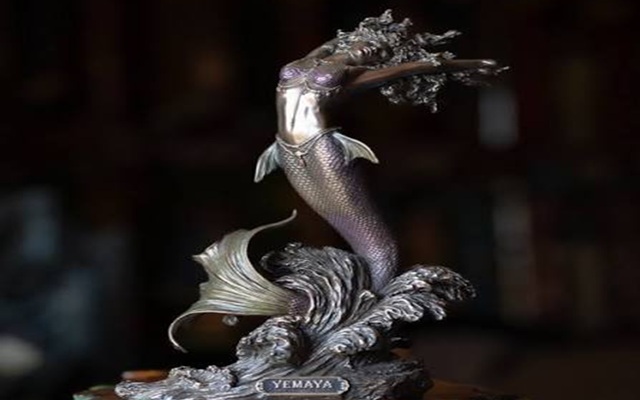
“So much for Yemaya the nurse,” I apprised the doctor.
“Say what?” he responded, cupping his left ear. “I don’t have any idea. Unwrap that leg and let’s have a look. See what we can see. Fix em up.”
I realized that the pressure was no longer about helping the doctor’s skills. We both knelt. I took the doctor’s bag and opened it. He unwrapped the man’s thigh, which had a huge lump protruding from it.
The man screamed so loud it made my ears ring. The doctor proceeded while I reached into his bag for a bottle of Morphine Sulfate. There was only one syringe, which I filled with ten milligrams of the yellow liquid. I bared the man’s struggling arm. His fevered eyes stared into space. I showed him the syringe. He nodded back, fighting off another scream, as the doctor bared a specialized hatchet handle sticking out of the man’s thigh. I aspirated the syringe, stuck it into his bicep, and then plunged the whole load into his arm. I did not bother to back pull to make sure I hadn’t hit a vein. His need was critical.
I reached over and pulled my own canvas sack to me. I refilled the first syringe, and then prepared a second, just in case. Ten milligrams of morphine sulfate suppressed pain, but not necessarily in a big man. It could take twenty or thirty, yet the latter might kill him. Twenty would put most men out cold. I took out my Mont Blanc and wrote on the man’s arm: “Ten Milligrams Morphine.” I also marked the time. Next, I set the other two syringes near him on the canvas. The doctor stood up.
“Stuff’s in there. I need some air,” he explained, prior to walking out of the open door.
Marlys leaned with her back against the far wall, her arms crossed, and the anklet occasionally twinkling. A 300-pound man in a plaid shirt and jeans came out of an undersized office attached to the wall near where Marlys stood. He approached me with nostrils flared.
“Bout time you got here. You sure took long enough. What a mess. He missed the God-blessed fish, he did, and now this,” he gestured down. His eyes got large, and he turned white as he looked down.
“Jesus Christ,” he breathed, staring at the hatchet inserted into the man’s leg. He whirled and went straight back to his office.
“Just you an’ me,” I comforted my patient, who had calmed down. His eyes were half-lidded from the drug.
I saw a water hose coiled against the far wall. I dragged it over, then went back to the tap and turned it on until I saw a very small stream coming from the nozzle. I went into the supervisor’s office, or at least that’s what the sign on the door said. The big man was bent over, tossing into his wastebasket.
“Got some booze?” I asked him, between heaves.
He pointed at a file cabinet drawer. I opened it and pulled out a half-filled bottle of Jameson’s Irish Whiskey.
“What is it with you guys? Nobody drinks rot gut out here?” I took the bottle.
The doctor’s bag was well supplied. I plucked out small plastic bags with Three-O and Five-O pre-needled stitching kits. I’d need the former for the deep tissue stitches, or the wound would not hold together. Trauma was my only medical specialty. I eased the hatchet back and forth in the wound. My patient groaned but seemed well enough anesthetized. I pulled the object right out.
The wound bled freely, but not in an arterial spurting manner. I took the hose and placed it at the upper end of the wound. I began irrigating until it ran clear. I breathed a sigh of relief when I found a stitching hemostat inside the doctor’s bag. Without these little pliers, interior stitching was almost impossible. Curved needles could not be manipulated with fingers. I began throwing surgeon’s stitch after surgeon’s stitch, doubles, and triples. When I was done with the interior, I poured most of the whiskey into the wound. Then I closed with the Five-O.
When I was done, I did the card dealer’s double hand flare, then clapped twice. The doctor reappeared at my side. Marlys walked over to examine my handiwork, and the supervisor again stepped from his office. I was about to instruct him about the patient’s care when he bellowed.
“You!” He pointed one big finger at the real doctor.
“Me?” the old man said, pointing an index finger at his own chest.
“Yeah, you. You are a thieving cur.” The man’s voice had risen to nearly a scream. I stood erect.
“What the hell?” I began, but he cut me off.
“This son-of-a-bitch came in here last year and ripped us all off. I’ll show you.” He ran back to his office, returning with a ragged fur in his hands.
“Here!” He threw the skin into the doctor’s face. “This thief said he bought the fur from my wife in town. Then he comes up here and says it was defective. All the fur was coming off. I tried to explain to the man that it was winter Reindeer fur. The fur comes off,
The big man continued: “So, I say, after trying to get him to understand, ‘to hell with it’ and give him his six hundred back. He takes off. And now I’m gonna take him apart. That’s what we do with thieves here.”
He moved toward the scrunched-down doctor. I stepped in front of him, blocking the way.
“So, you gave him his money back?” I took the ratty fur from the doctor’s hands. “Here’s your fur. The affair’s settled then.”
The man only glowered at me.“The son-of-a-bitch never paid my wife for it!” he yelled.
My heart sank. I had not brought my roll of hundreds. There was no buying my way out of this one, I belatedly realized. I tossed the pelt, then turned to present my left side to the man. I brought my hands in close to my body, but left them ready, dangling by my sides.
“You can’t take him apart. He’s our ship’s doctor. I just saved your man’s life. You owe us.”
The man sneered at me, then at the doctor. Reason had left his eyes. Then he moved.
I caught his wrist, starting upward. It was the size of the thick end of a baseball bat. I redirected his energy to the outside and then leaned into his chest. He should have been pushed back, at least a few feet. It would have been all I needed, but I didn’t get it. Instead, he stood like a planted oak, reached his other arm around and literally threw me over his back. I landed in a heap, but vaulted up, shaken but unhurt.
Aikido teaches hand-to-hand combat, and how to fall. The falling I could do with this hard-bitten Alaskan giant, but I didn’t think I could take him in unarmed combat, Aikido or no. After his shoulders went back, he screamed and grabbed at his backside. He then brought his arms around in front of him, each holding a spent syringe.
“You bitch,” he shrieked, staring behind him.
He went to one knee. Then both. I helped him fall to the floor, turning him so his back was down.
“That woman is a bitch,” he whispered to me, his hands still clutching the morphine syringes, and his eyes closing.
I looked up at Marlys in question. She simply shrugged.
“He was in pain,” she finally said, her voice soft as silk but edged like a razor.









Don't Miss any Updates or New Chapters
Join our mailing list to receive the latest news and updates from our team. You can easily Opt-Out anytime
You have Successfully Subscribed!