
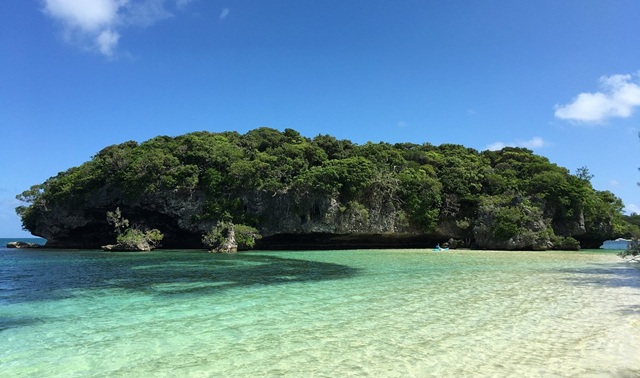
“Damn,” Don said, they didn’t try to take the Zodiac.” He turned to face me. “They couldn’t have missed our tracks. They didn’t take the valuable boat because they’re afraid we’re up here, armed, and watching them, or because they’ve already radioed the Russian Navy and the big guys are on their way here.”
All three of us lay there and thought. I looked back over. The small boat had reached the trawler. It was taken up quickly. The ship was underway in less than a minute. Don and Dutch both closed their eyes at the same time. Their expressions were not good.
“You got any pull with Russian immigration?” Dutch asked.
We made it back through the rabbit hole channel to our makeshift camp.
“We’ve got to sleep,” I insisted. “It doesn’t matter what’s coming, or who’s coming. We have to be in shape to meet whatever it is or whoever they are. In the morning we’ll haul the radio out and start calling. Maybe the “” will be close enough to hear.” Don lay back, his clothes drying on him, steam rising from the side facing the fire.
“If they come back,” he said calmly. I rolled over on the bed of soft but prickly pine needles.
“Oh, he’ll be back,” Don went on. “That Nazi Borman will come for his anchor. That’s a lock. And Yemaya doesn’t leave her charges to die in the wilderness, either.”
I preferred that thought. I wondered how Yemaya’s charges did die, just before I dropped off into deep sleep.
I awoke to find the fire burned out. Not even a plume of smoke came from the pile of ash. I sat up and rubbed my eyes and face. We had the Bic and my Stryker flint, if re-ignition were necessary. If we remained atop the island plateau for another day, we’d need the fire. I was hungry, but there would be no food. I scanned my fellow adventurers. My men. Both slept the sleep of the dead, as there was not a snore to be heard. I moved closer and tapped Don’s boot. He opened his eyes with a start, and then grimaced.
“I used to be able to drink that stuff by the gallon,” he complained, massaging his temples between both hands.
Dutch sat up. He didn’t rub anything. I assumed that his lack of obvious pain, from the amount of alcohol imbibed the day before, had to do with just how much he was accustomed to consuming regularly.
“I’ll build a fire,” I announced, gathering together pieces of branches and twigs we had not burned the night before. I took the Stryker out of the canvas bag. It took only three ‘punches’ down on the device to catch the wood afire. No kindling, or even dry needles. It was amazing. I piled on the smaller branches.
“What are you guys going to do?” I asked Dutch and Don. They looked rather puzzled.
“What is it that you command, oh great leader?” Don joked. Then they both looked to the heavens. I glowered. Mutiny in the ranks was a ways down the road, but the condition of enlisted troops bonding together to resist officer commands was already evident. It would have to be monitored.
“Don, is there chicory or maybe green sorrel on this chunk of stone?” Don nodded.
“Probably. It’s damn near everywhere at this latitude. I’ll see what I can find.” Dutch looked at me with a question on his forehead.
“Tea. With one of those herbs we can make morning tea,” I explained. “Go find a puddle of water where you can rinse out the outboard cover. Fill it with about a quart, or so, then come back.”
Both men made ready to move out.
“Don,” I said, stopping them, “Give me the radio. While you’re gone, I’ll head to the North rim and give it a try.” I held out my hand. He plopped the Icom transceiver into it. He pointed at the radio.
“Turn it on, modulate the squelch, and then push the red button to transmit. Don’t worry about having to wait to listen. It’s dual band.” Both men went to hands and knees, and then disappeared into the passageway we’d worn through the bracken.
When the fire was going strong, I crawled away toward the North rim. It wasn’t far, maybe fifty yards, but the going was rough. There were a lot more broken-up and downed pines as I got close to the edge. Finally, I reached a clear area of stone just before the drop-off. I peered over a dizzying drop. Eight hundred feet straight down, but I noted that the waves did not actually strike the base. There were many broken stones piled between the surf and face of the cliff. The ten- to fifteen-foot surf struck those rocks. One could not possibly land any craft there. Nonetheless, the way things were laid out gave me an idea.
I pushed the button on the transmitter and called for the ship. I felt funny calling for the “Disco” as it sounded like I was calling for some evening entertainment of the lowest class. Disco was a lousy name for a ship, even if it was only a nickname, I concluded. I called constantly, like my son had called me early in the morning when he’d been four or five years old. “Dad…Dad…Dad…Dad…Dad…” and on and on forever, until I came out of the warm bed and took care of him. After what seemed like an hour, but was more like ten minutes, I received a scratchy transmission. “Thank you, God,” I said to the clouds and the surf. “What’s your position?” I asked, hopefully.
“This is Third Mate Günter, on duty. Our position is approximately twenty-seven miles North of your position. We should arrive in position at the anchor float in three hours. We are making eight knots.”
I distanced myself from the radio, as if it was a foreign object under scrutiny. Typical German, I thought to myself. No questions about our condition, exactly where we were, or anything. The object was to retrieve the anchor. The three of us, abandoned, were merely there to be picked up. I pressed the red button angrily.
“Third Mate Günter, you would be advised to proceed at flank speed, as we have a visual at the location of the float. A foreign trawler has laid to, and the crew is examining it.” I let go of the button, smiling to myself, and waited. Seconds passed before the Third Mate came back through. His voice was noticeably stronger.
“We acknowledge your transmission and will make all speed.”
I liked the response, and then thumbed the button once more.
“Please call up the Zodiac driver Filipe. We will stand by for his transmission.”
I wondered just how efficient Third Mate Günter was, or if he would feel compelled to follow my directions.
I moved further back from the edge of the cliff and walked westward. I could see the other Island in the distance. The waves below crashed and boomed, but I could tell that they were considerably reduced from the day before. All around the base of the island I noted piled rough rocks. Only the lee side possessed smaller polished stones. I arrived at the westernmost curve where I could stand and peer down at the pass between the islands. The float was plainly visible below. I imagined the anchor chain to which it was attached, but even up eight hundred feet, and in broad daylight, the sea was too darkly gray to see through. The sea was very foreboding from above. There was no clue at all as to the white sandy bottom Dutch, and I had encountered. The radio clicked several times. The speaker emitted a heavy Tagalog accent.
“It is Filipe here. Can I help you? Hello…hello…” I thumbed my button.
“Filipe, stand down from the bridge. I need to talk to you alone.” I let go of the little lever and waited. It was a calculated risk. Would the Germans allow Filipe to speak out of earshot?
“I am here, on the quarterdeck alone,” the radio squawked. I smiled again. The Germans didn’t care about anything except the anchor. I gave Filipe the message I had prepared, then turned the volume knob all the way to off. The Icon did not draw much on receive, especially at low volume. But it drew heavily against the battery for transmitting. We would need the radio badly in something less than two hours.
I made my way back to the camp. Dutch and Don were sitting at the fire with an ungainly outboard motor-cover suspended above the fire, held in place by three large rocks spaced just far enough apart.
“Tea time,” Don proclaimed. I clapped and sat down. “Chai Tea,” he said. Carefully, both men poured the brown brew from one corner of the cover into the small opening of the Bacardi bottle. When the bottle was almost full, they set the cover aside. We passed the bottle around. The taste was raw, bitter, and pretty terrible. Something about it, or the situation, made it seem just right.
“I always wanted to do this,” Don confided, as I drank, trying not to burn either my hand or my lips on the boiling hot glass. I passed the bottle to Dutch.
“Always wanted to do what?” I pressed Botany Bay.
“You guys ever see Star Trek Five?” he inquired. Both Dutch and I had.
“The one where they steal the Enterprise,” Dutch said, sounding like he knew the film well.
“Yeah, that’s the one. Maybe the best one,” Don assured him. “Anyway, Kirk, Spock and the doctor sit around a fire somewhere. I think Yosemite Park. They sing “Row Row Your Boat”. That old English Nursery Rhyme.
Dutch and I said nothing. We just sat there and looked back at the big Canadian. He took a pull of tea from the Bacardi bottle before resuming again.
“Let’s do it!” I looked at Dutch.
“I can’t sing,” Dutch blurted out.
“That makes you Spock,” Don replied instantly.
“Alright, alright… I’ll start,” I said. I wasn’t a bad singer, but I had not sung anything for quite some time.
“Row, row, row your boat…” I began, and then Don joined in. Just as in the movie, Dutch stuttered and could not get it right. We practiced many times, giggling like schoolmates between each attempt. When we tired, we sat back, the bottle of tea nearly empty. Don interpreted for all of us. “We are, after all, now together on a mission to explore where no man has gone before.”
After we were done, I took out the radio and told them the story of my contact with the ship. I explained what had to be accomplished. We really had only one safe way to get off the island. Waiting next to the beached Zodiac below. I described a plan, and we set to work. We extinguished the remains of the fire and tamped down the fire pit. We all went in search of dry limbs.
Under the great pine we stacked our haul, then piled on as many dry brown needles as we could scrape together. I checked my watch. It had been almost an hour and a half since my last transmission. It was time.
We made for the cleft, dragging the outboard cover, canvas sack and the Bacardi bottle. At its top we peered down at the Zodiac. Thankfully, it was just as we had left it. It had bounced high enough onto the shore not to be snaked back out when the surf had changed. Now the surf was way down. I felt something. It was a familiar something deep in my chest, my being. A shiver traveled down my back as my body went on full alert.
“What’s that?” Dutch asked. The sound of distant helicopter blades could be heard.
“In under the pines,” I yelled, then plunged backward, followed by both men.
A dark shape went by the cliff face. The sound of its drumming blades was overpowering, and then it was gone. It was criss-crossing above the island.
“We’re screwed,” Don breathed, too afraid to raise his voice. “That was Russian, no mistaking it.”
“That’s an affirmative,” I said. The sound of Russian turbines under heavy load had been unmistakable.
“But it’s a troop chopper, not an attack. It’s from either the shore or a cruiser in the distance,” I surmised aloud. “They’re not here for much recon. They’re going to put Spetsnaz, or their new version of Commandos, down. Let’s go.”
I moved to climb down into the opening of the cleft.
“Let’s go where?” Dutch said, stupefied. I stopped.
“We’re going to follow the plan, with one small exception,” I drilled into them, as forcefully as I could. “They’ll have to rappel into these thick pines, get their bearings, and then move to clear the entire upper surface. They’re not coming up from the bottom of the cleft because of exposure during their hike. If we were armed, they’d be sitting ducks. Let’s go.”
I re-entered the cleft; this time, very relieved to hear the two men follow. We made it to the bottom quickly by sliding down the riprap, cascading stones and debris everywhere. I grabbed the outboard cover from Dutch and threw it into the Zodiac. I gave the radio to Don.
“Alright, start climbing. We’re going to climb over the rough rocks all the way around to the far side. Filipe’s going to pick us up over there. I’m headed back up to provide a diversion.”
I heard the whine of dual turbines coming from above, above and beyond the lip of the plateau.
“Get moving. That pilot isn’t going to loiter after he makes his drop. If our luck is good, you won’t be spotted.” I pushed hard against the big Canadian’s back.
“What diversion?” Don demanded, moving but slowly in the direction I had propelled him.
“Fire,” I said, simply. I held the Bacardi bottle up, and then pointed at the beached boat. “Gasoline,” I concluded, and then smiled.
He shook his head slowly with a frown, but both men began to move toward the curve of the cliff where the big rocks lay.
I ran to the Zodiac, jumped over the rubber gunwales, and found the severed gas line. I held the can up and gas poured into the Bacardi bottle, spilling grandly until I had a full bottle. I hopped from the boat, and then ran at the cleft. Everything was going to depend upon timing. I moved up the cleft, made the switchback, and hit the top of the cliff. I didn’t slow. I dived into our rabbit hole path, scrambling and crawling to the campsite, while cradling the gas-filled booze bottle. The pile was waiting. I poured the gas onto the pile, and then tossed the bottle. I took out the Stryker. One punch and the entire pile lit up with a ‘whoosh.’ I jumped back.
“Thank you, tree, for this last service,” I said, thinking of Silverstein’s children’s story about a tree I remembered reading over and over again to my son. I retraced the way I’d come. I ran and jumped from rock to rock, attempting to catch up to Don and Dutch. Without the cut-up dry suit, my knees and elbows would have been a complete mess. I was worried about the Disco. I’d failed to tell Don to turn the damn Icon volume back up. As I rounded the second curve, leading to the main face, which pointed directly North into the large waves, I saw the ship.
It was going to pass the island on the East, where I’d just come around. It had to approach the pass against the current to hold still under power. It moved deceptively fast. I caught up to Don and Dutch by the time they reached the western side of the island. Once again, I saw the float we’d punched up from the bottom. Don was talking on the radio.
He’d figured out the volume problem on his own.
“They’re moments away. Bormann wants to know what the smoke’s from.” Don held the radio out to me.
I took it from his hand but then turned it off.
“We can always explain when we get aboard,” I said, dismissively.
It took fifteen more minutes for the ship to heave into view and come to a full stop, relative to us, not the current. We waited with deep anxiety, looking up at every edge of the upper surface we could see. It would not take more than one sweep of an automatic weapon to finish us where we crouched, even from eight hundred feet up. Finally, a fast-moving Zodiac swept around the bow of the ship. It headed directly toward our position.
“What the hell?” Don asked, in consternation. “He can’t land here. How are we supposed to get on the boat.”?
He looked over at me, then down. I was sitting between the rocks, stripping off every item of clothing I had.
“There’s only one way, you guys,” I said, wrestling with my cut-down dry suit boots. “We climb up on that big rock over there, wait for a good-sized swell, then dive in and swim to the Zodiac. Filipe will pull us in. It’s all planned.”
Both men greeted me with big round eyes.
“Get moving,” I ordered. “You can’t stay here, and you can’t go back.” I prodded them as they swore, helping them get out of their gear just as quickly as I could.
Finally, we stood atop the rough rock and got ready to leap. Three grown men wearing only their underwear.
I carried the canvas sack in one hand. I wasn’t about to surrender the morphine. A huge wave welled up. I pushed hard on both men’s backs. They went in, neither performing a credible entrance dive. The important thing was that they surfaced floating, not far from Filipe’s outstretched arms. I waited for the right wave, then followed Don and Dutch into the sea. The water was cold but so welcoming compared to staying on the island to die.
Once inside the boat, we lay on the hardwood slats of the flexing deck to recover.
Moments later we rode around and under the fantail of the ship. The passengers and crew were all on deck as before. Marlys was there. I recognized the special necklace but could not see the anklet, as she had on white slacks. She looked magnificent. She did not wave, and neither did I. A cold wind was blowing. Once more, an uncomfortable thought consumed me: I’m parading before everyone wearing almost nothing, while trying to focus on what had happened and what almost might have happened.
Somehow, before any mission was underway to get to the boy, real danger was presenting itself in ways that were simply impossible to predict. The question about the anchor wouldn’t go away either. Why had Don cut it loose? How was that even possible with an anchor and chain that had to weigh in at just short of twenty tons? Who or what was Don really? At least we were in Russian waters, which meant the mainland was not far off, and the real mission might begin.






I wondered about the chain to the anchor, how and more importantly why ??
Somebody knows and I’m sure we will soon find out if it was a diversion or a time delay to allow the ruskies an opportunity to capture you ??
However now all is well since all aboard once again. Right ? Right ??
let us know soon please LT ….
Semper Fi
The mysteries that manifested on not just the cruise to get to the port of Provideniya were nearly as bizarre as the mysteries once truly on the mission. The world on its outskirts can be a wild and dangerous place, although not always so for the tourists in protected quarters and states of protection they don’t even know are there or exist.
More this week, of course.
Semper fi, my friend
Jim
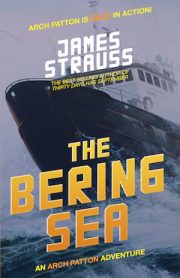
Take 2: the translation of the Bering into reality works better in the Cowardly Lion! I bet it was easier to write as fiction but a lot of the questions seemed to require more explanation! Reality is what it is! But balancing to 2 drives expectations. Do you really remember the difference? Glad you are able to get it correct!
Colonel Homan, yes, I remember the differences and the places where i went fictionalin in
the Bering Sea novel. It’s not so difficult but it is rather hard to put the Bering Sea
chapters on display so I can always know whwere I am when I’m wroking on the new idition
of the original story. Thanks for mentioning that, my great friend,
and Semper fi,
Jim
Every week you continue to amaze me. I wish now that I had kept a journal, I now have trouble remembering what the Doctors tell until I get home. I want to find where I hit that Bering Sea book of yours. I have read everything that you have published and I remember nothing of the “fiction” of this current “Adventure.”
Thank you for all that you have done.
The Bering Sea, as written with many parts fictionalized, so I wanted to go through it and make it more
of a non-fiction presentation, which is what you read in the latest chapters of The Cowardly Lion.
I won’t always be here to make the distinction, and since most of what I write about the war and intelligence work
is from the experience, I want to have a record written that can be referred back to by those who might
care and have an interest in such an exercise. Thanks for bringing this up.
Semper fi,
Jim
Very intrigued by Marlys and how she fits in as this unfolds. Keep them coming!
Marlys was an enigma, as were some of the other characters I met along the way.
True to form, from combat and intelligence work, those characters disappear after the
action is over and are generally never to be seen or experienced again, which can
be both painful and frustrating.
Semper fi, and thanks for surfacing your interest in the work and her existence.
Jim
LT love all the comments above as they heavily apply to the mission ifs it a real mission. Another fine chapter in a lifetime adventure. Keep’’em coming.
My friend JT, you managed to touch certain parts and create a sensitivity that was not apparent
before your comment. My work in responding to comments is a labor of love, as I so much appreciate
that my readers have significant enough interest to write to me. That’s not easy to do.
Yes, I write relatively easily without much transition, but I know way down deep that most people are
not given that kind of talent. It’s a great pleasure to read your words and most of their words too,
as well as respond here, as I am to you.
Semper fi, great friend,
Jim
I’m with Walter on this one. Your success over the years has been through the myriad of plans that actually worked.
Seem to be fading a bit more rapidly, so please accommodate a bit of haste in your concluding chapters. The VA in Columbus is good, but miracles? Not many
Would you please, my dear friend Craig, not mention that you are ‘fading,’ as it was a tough enough day
without that bleak black spot in front of me. Do not fade. If you do fade, just lie and say that you are not.
I know, I know, many times it is better to have the news, good and bad, than not have it at all. This is not
an event like that. I do think of you reading when I am writing, as I do of characters like THE DUKE, Homan,
JT and many more. If you precede me into the next quantum level of transferred existence, would you leave
some sort of breadcrumbs behind so I can follow your unlikely trail? If I don’t find you, at least I will be able to
have the sustenance of the bread pieces!
Jim,
You come up with more plans than Medicare and Medicare alternatives. But your plans make sense and actually work.
So you extract yourself and your team from one peril to face new and lingering past perils lurking in the ever present shadows.
Now let’s resolve the anchor issue, the immigration issues, the forest fire issue, the nosey Russian issue…..
Thanks for another serving. Please sir, may I have more?
THE WALTER DUKE. Yes, indeed, there are more ‘servings’ coming, as you demand and surmise. Onca again, my life was generally lived in more than three dimensions
all existing at the same time. How could there be so much tumult and anger even before I could get to the heart of the mission? How to reach not only the gulag but the kid inside himself.
Yes, plenty of mysteries to work to clear up so that the clearance would prevent the failure or potential terminal completion of the mission.
Thanks for the usual vitally interesting comment.
My great friend,
Semper fi,
Jim
Loving the story, and the wonderful descriptions of the terrain and how you deal with it. And I am just peachy fit, if the peach is several months past “best by” date…..
As you, I am bewildered by someone cutting an anchor chain. Circumnavigated several times via ship – those anchors come in handy from time to time.
Waiting breathlessly for the “rest of the story!”
Thanks for the compliment of your presence here Craig, always fun to read what you write
too…and more is on the way.
Semper fi, great friend,
Jim
So hard to figure each individual addenda or whether they impact the mission? Excellent array but we also project what is happening outside the “Word” today!
Homan
Colonel, as you know. Everything impacts the mission, as it takes getting there to even begin the actual tactical work to get the
subject out, as well as reach him in the first place. Just figuring out the players and what they were up to, like in
why the anchor was sacrificed, can be daunting, and was. Thanks for the usual penetrating remarks.
Your great friend,
Jim