
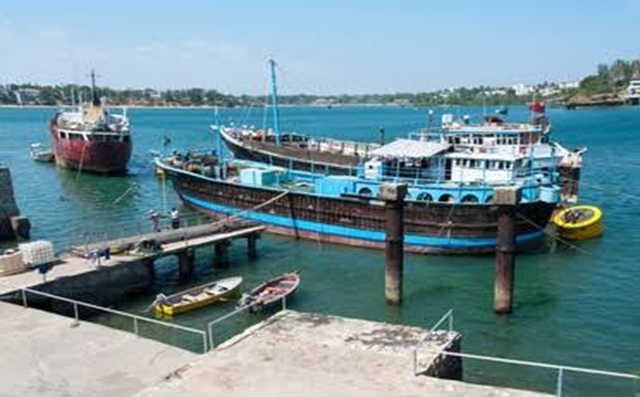
WE’VE COME TO MOMBASA
A SHORT STORY
BY JAMES STRAUSS
The Lunatic Express was late, as always. John Tipton, my partner, was fresh out of “The Farm” at Camp Perry and six feet four inches tall. Arnold Schwarzenegger would have blended in better. I shook my head. What would the agency send me next? Supposedly, it took almost three additional years of training, after basic, to build an agent into a foreign services officer, or a ‘player,’ as we termed ourselves. What had allowed Tipton to shortcut the additional training? Rarely, but sometimes, they waived training for language skills, or other specialties I was seldom informed about.
“Jambo, bwana,” I tried, in Swahili, when we met at the airport.
“Huh?” Tipton replied, shaking my hand. So much for the language theory.
The trip down to Mombasa on the steam train was uneventful, except for the fact that the train was powered by steam. Train trips all over Africa were known mostly for being overcrowded, non-aromatic and not possessing much in the way of either heat or cooling. The windows of our sleeper were wide open because of the early September heat, and therefore constantly sucking cinders in from the engine’s stack, when the wind blew the wrong way. Tipton got up several times to stick his head out the window and exclaimed, “We’re going to Mombasa,” into the heated wind. I groaned and turned over each time.
We arrived in Mombasa just after dawn, having slept fitfully aboard.
We got off the train with some relief and went into the over-crowded terminal to wait for a more reasonable hour, when businesses would be open, and drink some strong, but very smooth Kenyan coffee. The coffee was poured at a small counter into ceramic mugs already half full of hot milk. The small tables were all taken until we walked among the density of the native population filling the place. John and I were the only Caucasians in the place. As soon as we got close to a back table, the men sitting at it grabbed their cups and belongings and walked away.
“We’ve come to Mombasa!” John exclaimed with relish, raising his cup as he sat down. I could not but shake my head and grimly smile at my partner’s exuberance.
“Yes, we have,” I replied. “Now what is it we do first?” I looked at John over the lip of my coffee mug.
“Get the rental car.” John grimaced when he answered, letting me know he felt as if he was being brought down and treated as a child. Which he was.
“Good,” I said, “for now, let’s just look around and enjoy the morning.” We could not risk talking about anything else in such a crowded public place.
The cab ride from the train station to the airport was short. Argus Car Hires was the only open car rental agency near the concrete terminal’s entrance. A credit card deposit, using our American Express drawn on a real but not-so-real American company, we were on the road in a Ford Taurus in minutes. The air conditioning wasn’t functional, of course.
“Now, what’s the mission?” I finally asked, breaking our long silence.
“We’ve come to Mombasa,” John giggled, while throwing up his hands.
I glared over at him from the driver’s seat.
“Find Kahled Mohammed, isolate him, and then get our question answered,” John parroted finally, from the drill I’d given him before the mission went operational.
“Yes, find Kahled, John, but we already have our question answered. Saleh Nabhan was working for Black September (Abu Nidal) in arranging the Nairobi bombing. So, what is it we need from the target?”
“Confirmation,” John shook his head in frustration. There had been no written mission statement or any of the formality he had learned at the farm. John, for whatever reason I was unaware of, had simply been assigned to his first operation without any knowledge or preparation. After I’d met him at the Nairobi airport, we’d gone straight to the Embassy and then sat through Charley Hall’s verbal instructions together. Charley is the ‘Communications Director’ for the embassy, but in reality, the CIA Chief of Station for the entire region.
Charley had told us who Kahled was, that he was living aboard the Likoni Ferry, his family owned down near Mbaraki Creek, and that we needed, in whatever way we chose, to get confirmation. Oh, and that two other agency operatives would meet us at the ferry, both from the embassy, one an analyst and the other a communications tech. Both were supposedly familiar with the port of Mombasa.
“Now, what is our first objective to accomplish the mission?”
“Find Kahled,” he answered.
“Correct,” I smiled sincerely over at the younger man.
“Second objective?”
“Isolate him.”
“Two for two,” I smiled again. “And the third?”
“Get the confirmation.”
“Good. The fourth, we’ve not discussed. We let him go, as unharmed as possible, when we’re done. Clear?”
“Yes, boss,” John smirked as he drove. “Ah, where do we go?’
“Pull over, let me look at the map.” I used my Mont Blanc to mark where we were, then outlined a supply road back to a dead-end bay where some ship hulls lay. “The ferry is here,” and I circled another area near the water.
“Oh, by the way, the fifth objective is to get the hell out of Dodge.
That means getting back to the airport. Don’t lose the car keys. We’ll call Hall with our data and fly out, or, as a bailout, use the embassy chopper.”
“The embassy’s more than three hours from here, and that’s if the chopper is an Apache!” Tipton said, concern showing on his face.
“It’s already here. There was some planning done.” I smiled.
“Let’s go check out our ‘Sweet Spot.” I smacked the Mbaraki Creek mark on the map.
“Do we get a duty weapon issued for this?” John asked.
“Those guys from the embassy will have weapons. We won’t need ’em.”
“What if things go wrong?” John glanced at me quizzically, then back at the fast-moving traffic.
“Things always go wrong. That’s why I got the mission. It’s what I do. I make solutions out of problems. And the last thing we want is to be caught with a weapon. That’s called an international incident. The prison here is Macadara, and it’s famous all over Africa. I don’t want to go there again.”
John nodded, but it was apparent he was not satisfied. We rode together in the hot Ford all the way back to the end of the Creek. John stopped the car when we ran out of road. A hugely disheveled and rusty old ship was grounded there. We got out. There was not a soul in the area. I found an old plank, but it took both of us to extend it over the water to the deck of the ship. Once aboard, we found the place to be perfect. Old chains and cables lay everywhere, and the far side of the ship was open to the end of the creek. No one would likely see us if we stayed on the far side of the vessel.
“Let’s go. The embassy guys should have the ferry staked out. The Likoni runs back and forth to the mainland about every half hour. We should be out of here by noon.”
“How will we find them?” John asked. I could not even answer for a moment, my look of astonishment was almost enough. Finally, I had to sigh.
“Look around? See many white folks? Sitting around in rental cars? “Jesus Christ!”
We drove all the way down Mama Djama Boulevard until we came to a great curve where many ferry picture signs were posted. A white Ford, a clone of ours, sat just off the road. Tipton looked over at me when he saw it, but said nothing. We pulled behind it. I nodded for him to get out as I exited from my side. Tipton spoke as his door closed.
“Aren’t we going to stick out like sore thumbs then? After what you said?”
“Yes, we are. But it’s not going to stop that ferry from landing, or us going aboard, or us finding and escorting Kahled back. This is Kenya. If anybody says anything, they probably won’t call anybody. Too afraid. If they do call, the locals will take all day to figure things out…which they probably never will.”
“How do you know that for sure?” John asked, shaking his head.
We got into the back seat of the other rental. I frowned as I noted that the air conditioning of their car was producing ice-cold air. It felt wonderful.
“When?” I asked as soon as both doors slammed, and I was seated.
“Twenty minutes, give or take.” The driver said, not even turning.
Both embassy operatives wore wrap-around sunglasses, making them look like insects.
“Lose the glasses,” I said, my tone flat. Both men immediately complied.
Tipton stuck his hand between the front seats. “Hi, I’m John Tipton,” he said with a smile.
Neither man turned or seemed to notice in any way.
“John Tipton,” I whispered, “Neither of these guys wants to know you, and neither is going to remember you. They’re here as silent support.”
“What is silent support?” he said, slowly taking his hand back.
“They witness the confirmation. They go away and get help if things go wrong. They’re not field people.” I smiled and nodded, attempting to be as friendly as possible.
“Oh,” was all John said, going quiet and looking out the window.
Twenty minutes later, the ferry blew two toots of its horn, then eased in, the wooden docks squealing and cracking away. I opened the door of the Ford.
“Wait here,” I said forcefully, knowing that would not be the end of it.
I waited. John did not disappoint.
“You’re going aboard alone? Unarmed? To take down a known terrorist?”
I smiled, congratulating myself on my prediction.
“I’m going to talk to a man about his family. Kahled’s entire extended family owns, operates, and lives aboard that ferry. He will instantly realize that the good dictator of this country has abandoned him. And he’s not a known terrorist. He just knows one. So, in a word, yes.”
I made the short walk to the ferry, the heat more noticeable as I approached the water. People, animals, and autos all exited the ferry at the same time. I went aboard. Nobody questioned me. I went to the outside of the main deck, found a ladder, and began to climb. Three flights later, I came to the wheelhouse deck. The wheelhouse door was open, so I stepped in.
“I need to see Kahled,” I said to the three Africans standing inside the small room. The aroma was enough to wrinkle my nose, but I resisted.
“He is not here,” the man at the wheel stated.
“Get him. I’ll wait.”
The three men looked at one another but said nothing. One man walked out. I waited. Only moments later, another man climbed the ladder behind me and walked to my side. He was dressed in a brocaded white shirt and Western-style slacks, and surprisingly, Western-style leather loafers. Good leather was very hard to find in Kenya. I’d never met Kahled, or even seen a photo of him, but I knew it was him, even before he spoke.
“What do you want?” I read his expression. Fear. Anxiety. A question formed on his brow.
“United States,” I answered the question directly, “Intelligence. We need to talk to you.” He stood unmoving and stared into my eyes.
“We don’t want to harm your family. I have men.” Kahled looked at me for another moment, then believed me. He nodded. I walked around him, climbed down the ladder, and then began the short walk back to the cars. I did not look back. Kahled caught up with me when I reached the first Ford.
I knocked on the car driver’s window lightly, and the window came down a couple of inches.
“Tell Tipton to get back into our car. Follow us.” The window went back up, and Tipton exited. He rushed back to our car and opened the door.
I guided Kahled to the passenger door and opened it for him. He got in.
“Drive slow and easy,” I said to John, across Kahled, knowing that I should probably have said nothing, but not being able to help myself. John could turn into a loose cannon given any provocation. I wanted to prevent that if at all possible. I got into the back.
We drove to the side of the ship marooned in Mbaraki Creek. Nobody spoke. Upon arriving there, I motioned for Abu to get out. He and John headed for the makeshift gangplank. The other Ford drove up and stopped, so I walked over. Once again, the window came down.
“We’re going aboard,” I said. “Give us ten minutes or so, and then come up. We’ll be on the main deck, port side. That’s left.”
I smiled to transmit the fact that I was joking, but the face on the other side of the glass did not change at all. I shrugged and followed Kahled and John up onto the deck of the ship.
We worked our way across the deck, moving cables and pushing aside rusted sheets of metal. Finally, we all stood next to the waist-high safety chain at the far edge of the deck.
“Kahled, just stand there and don’t move. You’re not going to like this, but go along with me.” I selected a long, heavy chain from a nearby pile, pulled one end of it, and began wrapping it around Kahled’s legs. He grimaced but said nothing. I noted John’s eyes growing larger. I grabbed another, longer chain, and wrapped it all the way up past the man’s waist. Then I finished the job with a final length; the chain now wrapped all the way to his neck. His back was toward the water.
“Now, for the question. But, before that, to demonstrate that we are dead serious in our request…” I unhooked the safety chain behind Kahled, taking it off both posts. I re-hooked one end to a piece of heavy chain at his waist, then hooked the other to John’s belt.
“He’s your responsibility now,” I said with a sincere smile. I then turned to face Kahled.
“Look over the side,” I began, “the water is about twenty feet deep.” I looked over his shoulder, but Abu made no move. “If you fall in there, with all these chains on, there’s nothing in the world that will save you. It would take heavy equipment to dredge you out. And it would all be too late.” I smiled at Kahled’s pasty white features. I waited then. It took several moments, but then I heard the sound of scraping metal. The two embassy agents worked through the debris.
“Neat,” one of them said, taking in the scene. I turned back.
“Okay, Kahled, here’s the question. Was Saleh Nabhan in charge of the Nairobi bombing? Was he working for Nidal’s people? But, before you answer the question, please listen to me. You must answer the question, then somehow convince me that you’re telling me the truth. If I don’t believe you, over the side you go, for a very short swim.”
Perspiration had begun to bleed from Kahled’s forehead, and his shirt, what you could see of it, was soaked through. He frowned before speaking.
“How can I convince you of the truth?”
“I have no idea. Be creative.” I smiled again. A full minute passed.
“He used two bombs,” Kahled said softly, “both were made of fertilizer and diesel fuel. The one went off almost a minute after the other, so the people running to safety would be caught and killed. He said it was a daisy bomb.”
“Daisy chain,” John quickly corrected. I frowned him back into silence.
“And Saleh is Nidal’s second cousin.”
I smiled broadly, then turned to the two agents.
“Got that?”
The agent on the left raised one eyebrow. “ I got the first part, nobody could have known that, but how does the second cousin thing confirm Nidal’s connection?” I shook my head. “I thought you guys were in on this stuff. By saying that, Abu has just told us something that nobody else knows, and, not only that, but he’s also told us why Saleh did it.”
“Why?” the agent could not help asking.
“Because he’s family. He did it for family.”
“That’s it then? You’re done with him?”
“Yeah,” I said, not thinking, just turning back to face Kahled.
Two hands thrust past my right side, grabbed Kahled by both shoulders, and pushed him over the side. John followed, in a tumble. Neither man screamed. There was just the sound of one huge splash. Both men instantly disappeared under the water.
“What have you done?” I shouted, staring down, then went to my knees, waiting for the water to clear.
“Street justice. As ordered. Your partner’s never going to be able to save him.”
“Save him,” I cried, “he’s chained to him!”
“Oh shit, the agent said. Sorry. We’ve got to get the hell out of here.”
I heard them leaving behind me. I pulled my watch off and put it into my pocket, unreasonably. I took my shoes off, then my sox and dived straight down. I hit the water hard, but I had been a three-meter platform diver in college and was a SCUBA Instructor, as well. I immediately surfaced and began deep breathing. In and out, in and out, overloading my system with oxygen. Finally, I dived down. Many people can hold their breath for a long time underwater, but not many at all can do work while holding their breath underwater. I knew how to stay under and do the work.
I reached the bottom. John was thrashing, attempting to swim upward with all his might, but the small chain held. I got it under him so that it was attached to the bigger chain. I tried to unhook the catch, but it had caught under one of the heavy links. I needed slack. I grappled with John, but he continued to thrash, panicked out of his mind. I tried to reach the catch on his belt, but there was no hope of that. I surfaced. Again, I started deep breathing.
I went back down as fast as I could. Kahled was still, back down, his eyes wide open in shock and surprise. Tipton floated above him, also still, his face set in a rictus of horror. But I had the slack I needed. I worked the catch loose from Abu’s chain, then rapidly surfaced, pushing Tipton before me.
Once on top of the water, I realized my secondary problem. The ship was long. The end of the harbor was huge. I would have to swim John’s body all the way around the bow of the boat just to get him into some semi-solid mud. I swam, using a cross-chest carry.
The swim was brutal. Tipton was big and heavy. The mud was even worse than I had feared when I got him to it. I tried some weak chest compressions, then some mouth-to-mouth. But I knew it was over. I just sat there, the bugs feeding on both of us. For once, I did not know what to do. I did not want to do anything, but slowly, I rose. I went through John’s pockets and found the car keys, his wallet, and even his Passport (which I had asked him to carry in his shirt pocket). I started to slog through the mud, then went back and stood above John’s body.
“I am so so sorry, John,” I said aloud, then I looked beyond the stern of the ship. “Kahled, to you, as well. Then I whispered, “We’ve come to Mombasa”
My face was covered in tears as I climbed my way back to the car. Then I went through the motions. I washed up with a pail of dirty water nearby. Then I pulled out a change of clothes from my bag in the trunk. I made my way back to the scene of our crime on bare feet, trying not to cut myself. I found my shoes. One of Kahled’s shoes was next to mine. I examined it. Allen Edmonds. From Wisconsin. He had written his name into the leather. He had been fond of those shoes. I got back to the car trunk and took out the special cell phone I had been given, then dialed Charley Hall. He picked up immediately.
“We’ve had a casualty. Friendly. He’s still in place. What do you want to do?” Then I waited, my mind spinning. The two agents were not who they were purported to be. They had been players. No analyst or embassy ‘cowboy’ was going to pull off a termination like that. That kind of work took specialists. Wet-work, knuckle-dragging specialists. I’d been lied to. The death of Abu had been pre-determined. The death of Tipton had been collateral damage. Collateral of the very worst kind. And I had missed every sign. The ridiculous sunglasses. The too-cool aplomb.
The laconic attitude. I’d missed it all, even their cowardly abandonment of another agent in trouble.
“Come in. There’s no rush. Clean up is in place.” Hill hung up the phone.
I stood there, still holding mine. “But I’m not finished,” I finally breathed, softly.
I looked back at the scene once, before getting into the rental. I drove to the embassy in Nairobi. I drove all day, next to the tracks of the Lunatic Express, except for the roads and bridges around the many gorges. I did not reach the embassy until three a.m. the next morning. I parked outside on the street and sat in the car. I did not sleep.
The embassy opened at seven. I took my passport out and went to the Marine Guards, checking the arrival and entry of early morning employees. I presented the document.
“I belong to Charley Hall,” I said. The Sgt. nodded, not checking anything, not entering my name in his book. Not even really looking at me.
“He’ll be in momentarily,” he waved as he said the words.
I walked past the other guards, then to an interior guard, protecting the ‘inner sanctum.’ He nodded stiffly, having seen and talked to me the day before. I went through to the courtyard and began to pace. I paced for more than an hour, as people came and went. Finally, Hall appeared, his thinning hair a bit mussed, but looking cheerful. He walked by, and I followed him. I closed the door behind me when we arrived in his office.
“The mission was a success, as usual…” he began, but I held up one hand.
“This is personal.” I stated the words flatly; I was surprised myself at the malice behind my tone. But Hall was unfazed.
“Tipton was new and inexperienced. I really am sorry. I know you’ve had problems like this before.” My breath began to grow short with his final words. I fought for control of my rage. I’d lost two partners on previous missions, but neither had been my fault. I must have shown some of my feelings.
“Are you all right?” he asked.
“When I said personal, I meant between you and me.” I did not blink or project any expression at all.
“Ah, what do you mean, personal?”
“Abu was killed, murdered by us. I was not informed, and neither was Tipton. I was the agent in charge. You murdered Kahled, and you killed Tipton.” The words had reduced themselves to whispers.
Hall leaned back in his chair. “How long have you been doing this? Fourteen years? I didn’t order that, and you know it. I just did my job. And you weren’t the agent in charge. I was.” He leaned further back as I approached the front of his desk.
“I have a question then, for the agent in charge.” I stood perfectly still, my arms at my sides, as if I were at attention.
“Go ahead.”
“How do you expect to get out of this office?” I said, staring into his eyes.
“Wait a minute here. What are you saying? Just cool off.” I could see real fear in his eyes. His eyes looked fleetingly about him. He had nowhere to go and could not possibly defend himself. He was finally getting it. I thought about killing him. About the different ways to kill him right there in his chair. And then I thought about the gigantic mess that would be. The end of my career. I started to laugh.
“The end of my career. I just thought about the fact that if I kill you, my career will be over. Is that not hilarious?” I laughed.
Slowly, Hall reached for the phone.
“Don’t bother,” I said, turning.
My thoughts had already preceded me out of the office. Tipton’s wife would have to be called. John’s stuff would have to be gone through before it could be sent home. The detritus of post-mission work was always left to the mission commander, although such things were never discussed, and no training was ever provided.






Another great short! Jim, you’ve got a host of regrettable memories, and with that didactive memory of yours, I’m sure you have a host of regrettable memories. It’s a wonder how balanced you are.
Glad you liked it and thanks for tipping me off that it was not up on the sitE1
Semper fi, great friend,
Jim